What is Street Art? Unpacking its Impact and Evolution
what is street art

What is Street Art? Unpacking its Impact and Evolution

Explore the vibrant world of street art, from its rebellious roots to its celebrated place in contemporary culture.

Dive In Now

Key Takeaways

  • ✓ Street art encompasses various forms, including graffiti, murals, stencils, and installations.
  • ✓ It often serves as a powerful medium for social commentary, political activism, and community expression.
  • ✓ While historically associated with illegality, street art has gained significant mainstream recognition and commercial value.
  • ✓ Major cities worldwide have become open-air galleries, showcasing diverse street art styles and artists.

How It Works

1
Defining the Medium

Understand the broad spectrum of techniques and intentions that fall under the 'street art' umbrella. It's more than just spray paint on a wall.

2
Tracing its Origins

Learn about the historical roots of street art, from ancient cave paintings and political slogans to the graffiti boom of 20th-century urban landscapes.

3
Exploring its Impact

Discover how street art transforms public spaces, engages communities, and influences social discourse. It's a dialogue, not just decoration.

4
Recognizing Key Artists and Styles

Familiarize yourself with influential street artists and the distinct styles that have shaped the movement. From Banksy to Blu, the diversity is immense.

The Multifaceted Definition of Urban Art

A diverse group of young adults posing stylishly in urban streetwear by a graffiti-covered wall. Photo: Tima Miroshnichenko / Pexels
To truly grasp what is street art, we must first understand its expansive and often fluid definition. Unlike traditional gallery art, street art is inherently public, existing outside conventional art institutions and often created without permission. It’s a dynamic umbrella term that covers a vast array of artistic expressions and techniques applied to public spaces. At its core, street art is about accessibility and interaction, transforming mundane urban environments into vibrant canvases that speak directly to the populace. It encompasses everything from intricate murals that tell epic stories to playful stencils that offer quick, witty observations, and even subversive installations that challenge perceptions of space and utility. The medium itself is incredibly diverse, utilizing spray paint, stencils, stickers, wheatpaste posters, mosaics, yarn bombing, and even light projections. This refusal to be confined by a single technique or style is a hallmark of the movement. Furthermore, the intent behind street art is as varied as its forms. Some artists aim to beautify neglected areas, injecting color and life into otherwise drab concrete jungles. Others use their art as a potent tool for social commentary, addressing political issues, human rights, environmental concerns, or economic disparities. It can be a voice for the marginalized, a platform for protest, or simply an act of creative expression. The temporality of much street art is also a defining characteristic; it’s often ephemeral, subject to removal, decay, or being painted over, which adds to its raw, urgent appeal. This impermanence contrasts sharply with the permanence sought by traditional art, embedding street art with a unique sense of immediacy. The rise of digital photography and social media has, however, given many pieces a virtual immortality, allowing their messages and aesthetics to spread globally even if the physical artwork no longer exists. This digital dissemination has democratized art appreciation, allowing a broader audience to engage with and discuss these powerful visual narratives. The conversation around street art also grapples with its legality. While some works are commissioned or permitted, a significant portion exists in a legal gray area or is explicitly unauthorized. This rebellious spirit is often seen as integral to its identity, a challenge to authority and the conventional ownership of public space. Understanding these layers – its public nature, diverse forms, varied intentions, and often controversial legal status – is crucial to appreciating the full spectrum of what street art represents in the 21st century.

From Ancient Walls to Modern Masterpieces: The Evolution of Street Art
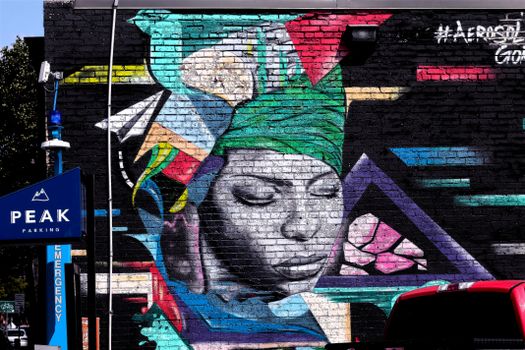
Vibrant mural of a woman on a brick wall showcasing modern street art style. Photo: Terrance Barksdale / Pexels
The lineage of what is street art can be traced back far beyond the vibrant graffiti of 20th-century New York. Humans have been marking public spaces for millennia, communicating messages, asserting presence, and expressing beliefs. Ancient cave paintings, Roman political slogans etched into Pompeii’s walls, and revolutionary posters plastered across European cities all share a common thread: art created in public, for the public, often with a message intended to resonate with or provoke passersby. However, the modern street art movement, as we largely understand it today, truly began to take shape in the late 1960s and early 1970s, primarily in Philadelphia and New York City. This era saw the emergence of 'graffiti,' initially characterized by tagging – stylized signatures or names spray-painted on subway cars and city walls. What started as a subculture of self-expression and territorial marking quickly evolved into an elaborate art form. Artists like Taki 183 and Cornbread gained notoriety, their tags appearing ubiquitously across urban landscapes, challenging perceptions of property and public space. The 1980s witnessed a significant explosion in graffiti's complexity and artistic ambition. Artists moved beyond simple tags to develop intricate pieces, often incorporating characters, elaborate lettering, and vibrant color schemes. This period also saw the rise of 'wildstyle' graffiti, a highly complex and often illegible form of lettering that required significant skill. Simultaneously, artists like Jean-Michel Basquiat (under the pseudonym SAMO) and Keith Haring began to bring their street-inspired aesthetics into galleries, bridging the gap between the underground and the mainstream art world. The 1990s and early 2000s saw a diversification of street art techniques. Stenciling, popularized by artists like Blek le Rat in France and later globally by Banksy, offered a quicker, more reproducible method for creating detailed imagery and delivering powerful political messages. Wheatpasting, which involves pasting paper artworks onto walls, also became a popular technique, allowing for larger, more detailed images to be created off-site and then quickly installed. The digital age further accelerated the evolution of street art. The internet provided a global platform for artists to share their work, find inspiration, and connect with a wider audience, regardless of their physical location. Documentaries, social media, and online art communities have played a crucial role in bringing street art from the margins into the mainstream, fostering a global community and increasing its visibility. Today, street art continues to evolve, incorporating new technologies like augmented reality and projection mapping, while still holding onto its core ethos of public engagement and often, subversive expression. Its journey from ancient markings to contemporary, globally recognized masterpieces reflects a continuous human impulse to communicate and create in the most accessible of arenas: the street.

The Cultural and Social Resonance of Street Art
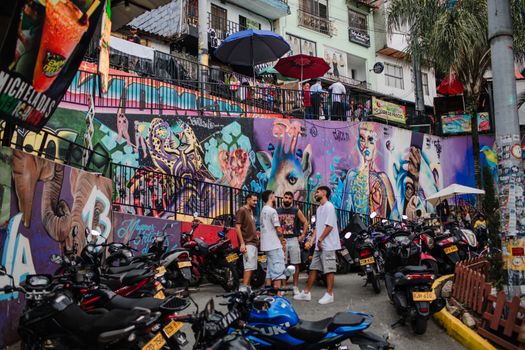
Dynamic street scene featuring colorful graffiti and local culture in Medellín, Colombia. Photo: Tiarra Sorte / Pexels
Beyond its aesthetic appeal, what is street art fundamentally, if not a powerful mirror reflecting and shaping culture and society? Street art often serves as an immediate, unfiltered commentary on the world around us. Unlike traditional art, which can be seen as exclusive or intimidating, street art is democratic; it meets people where they are, in their daily routines, often prompting spontaneous thought, discussion, or even action. One of its most significant roles is as a vehicle for social and political commentary. Artists frequently use public walls to address pressing issues such as gentrification, police brutality, immigration, environmental degradation, and economic inequality. A mural depicting a struggling community or a stencil highlighting a political injustice can spark dialogue, raise awareness, and even mobilize communities in ways traditional media might not. It gives a voice to the voiceless, transforming neglected spaces into platforms for expression and dissent. For example, in many cities across the US, murals have become memorials, honoring victims of violence or celebrating local heroes, thus weaving art directly into the fabric of community memory and identity. Moreover, street art plays a crucial role in urban regeneration and community building. In areas that might be considered run-down or neglected, vibrant murals can instill a sense of pride, deter vandalism, and even attract tourism, leading to economic benefits. The transformation of a drab wall into a captivating artwork can change the entire atmosphere of a neighborhood, making it feel safer, more welcoming, and more culturally rich. This often leads to a renewed sense of community ownership and engagement. The debate around street art also highlights its complex relationship with legality and commercialization. While some purists argue that commissioned street art loses its rebellious edge, the increasing acceptance and commercial value of urban art have allowed many artists to sustain their practice and reach wider audiences. Galleries now regularly feature street artists, and cities actively commission large-scale public artworks. This mainstream acceptance, however, constantly forces a re-evaluation of its core principles: can art still be 'street art' if it's sanctioned? This ongoing tension between its subversive origins and its growing legitimacy is a key part of its dynamic cultural resonance. Ultimately, street art's impact extends to shaping urban identity, fostering civic dialogue, and challenging established norms of art and ownership. It’s a living, breathing art form that continues to evolve with the communities it inhabits, proving its enduring power to connect, provoke, and inspire.

Navigating the World of Street Art: Tips for Appreciation and Engagement
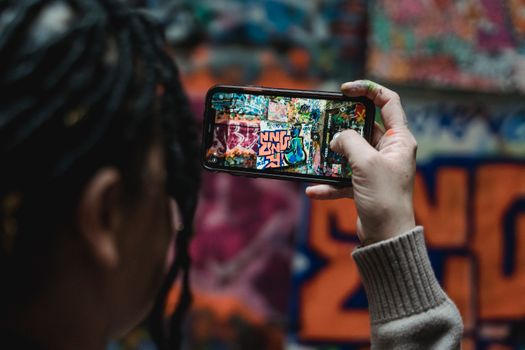
A person photographs colorful graffiti art using a smartphone, showcasing urban creativity. Photo: Felicity Tai / Pexels
Engaging with street art offers a unique and enriching experience, but knowing how to approach it can enhance your appreciation. Here are some tips for navigating and understanding the dynamic world of street art: * **Look Beyond the Obvious:** Street art isn't just large, colorful murals. Keep an eye out for smaller details: stencils on utility boxes, stickers on lampposts, or subtle installations. These often carry profound messages or artistic flair that might be missed at first glance. * **Research Local Scenes:** Before visiting a city, do a quick search for its street art hotspots. Many cities have dedicated street art tours, maps, or online guides that can lead you to significant works and hidden gems. Local art organizations are great resources. * **Consider the Context:** Always think about where the art is located. Is it in a bustling downtown, a quiet residential area, or a neglected industrial zone? The context often informs the message or the artist's intent. The surrounding architecture, community, and history can add layers of meaning. * **Understand the Ephemeral Nature:** Part of street art's charm is its impermanence. Don't be surprised if a piece you saw online is no longer there. Embrace this fleeting quality; it makes each encounter special. If you love a piece, photograph it, but remember the physical artwork might not last. * **Respect the Art and the Space:** While street art is public, it's still art. Avoid touching or defacing works. If a piece is on private property, respect boundaries. Remember that some art is created illegally, and artists may prefer anonymity. * **Follow Artists on Social Media:** Many street artists use platforms like Instagram to share their latest works, processes, and locations. Following them can provide insights into their creative journey and alert you to new installations. * **Attend Street Art Festivals:** Numerous cities host street art festivals where artists create new works live. These events are fantastic opportunities to see the creative process firsthand, meet artists, and learn about different techniques and styles. * **Differentiate Between Art and Vandalism:** While the line can be blurry, much street art aims for artistic expression, social commentary, or beautification. Random, destructive tagging, often referred to as vandalism, typically lacks artistic merit or a broader message.

Comparison

FeatureStreet ArtTraditional Gallery ArtCommercial Advertising
LocationPublic spaces, urban environmentsGalleries, museums, private collectionsBillboards, magazines, digital platforms
AccessibilityHighly accessible to all passersbyRequires entry/invitation, specific locationDesigned for mass consumption, targeted audience
PermanenceOften ephemeral, subject to changeIntended for long-term preservationTypically campaign-based, temporary
IntentExpression, commentary, beautificationAesthetic, conceptual, investmentPromotion, sales, brand awareness
LegalityOften unauthorized, varying legalityGenerally sanctioned, copyrightedLegally permitted, regulated
Audience EngagementDirect, often spontaneous interactionCurated, contemplative viewingPassive reception, persuasive messaging

What Readers Say

"This article truly opened my eyes to what is street art. I used to just see graffiti, but now I understand the depth and purpose behind the murals I walk past every day. It's transformed my commute into an art walk."

Alex P. · Brooklyn, NY

"As an aspiring artist, I found the historical context and evolution sections incredibly inspiring. It clarified how street art moved from the underground to global recognition, making me appreciate the pioneers even more."

Maria G. · Los Angeles, CA

"The tips for appreciation were spot on! I used them on my last trip to Wynwood Walls and noticed so much more than I ever had before. My photography of street art has improved significantly because I'm looking for deeper meaning."

David L. · Miami, FL

"While I loved the exploration of street art's impact, I wish there was a bit more on the challenges artists face regarding legality and preservation. Still, a very comprehensive and engaging read that broadened my perspective."

Sarah K. · Chicago, IL

"This article articulated exactly why I'm drawn to street art. It's art for everyone, telling stories that resonate with the community. It's a powerful tool for change and beauty, and this piece perfectly captures its essence."

Omar F. · Seattle, WA

Frequently Asked Questions

What is the main difference between graffiti and street art?

While graffiti is a foundational element and often considered a subset of street art, street art is a broader term encompassing diverse techniques like stenciling, murals, wheatpasting, and installations. Graffiti traditionally focuses on stylized lettering and tagging, whereas street art generally includes a wider range of imagery and conceptual approaches, often with more explicit social or political messages.

Is all street art illegal?

No, not all street art is illegal. While many early and some contemporary pieces are created without permission, a significant amount of street art today is commissioned by property owners, city councils, or organizations. Many cities actively promote street art as a form of urban beautification and cultural expression, creating legal walls and festivals for artists.

How can I find street art in my city?

To find street art in your city, start by searching online for 'street art maps [your city]' or 'graffiti tours [your city]'. Many cities have dedicated websites, apps, or local art blogs that highlight key areas. Exploring vibrant neighborhoods, especially those undergoing cultural revitalization, is also a great way to discover new works.

What is the commercial value of street art?

The commercial value of street art can vary wildly. While some pieces are created anonymously and are not for sale, works by renowned street artists like Banksy, Shepard Fairey, or KAWS can fetch millions at auction. Even emerging street artists can gain significant commercial success through prints, gallery shows, and commissioned projects, blurring the lines between public and private art.

How does street art compare to traditional public sculptures?

Street art differs from traditional public sculptures primarily in its medium, intent, and often, its permanence. Street art typically uses paints, stencils, or paste-ups on existing surfaces, often with a more immediate, raw, or subversive message. Public sculptures are usually permanent, three-dimensional works, often commissioned by institutions, aiming for monumental presence and lasting cultural statements.

Who should engage with street art?

Everyone should engage with street art! It's an accessible art form that requires no prior knowledge or entry fee. Whether you're an art enthusiast, a casual observer, a community activist, or simply someone who enjoys urban exploration, street art offers rich visual experiences and often thought-provoking narratives for all ages and backgrounds.

What are the risks associated with creating unauthorized street art?

Creating unauthorized street art carries legal risks, primarily charges of vandalism or defacement of property, which can result in fines, community service, or even jail time depending on the jurisdiction and severity. Artists also face the risk of their work being removed, painted over, or damaged by weather or other individuals.

What are the future trends for street art?

Future trends in street art include increased integration of digital technologies like augmented reality (AR) and projection mapping, creating interactive and dynamic public art experiences. There's also a growing focus on sustainability, with artists using eco-friendly materials and addressing environmental themes. Expect continued exploration of social justice issues and innovative collaborations between artists and communities.

Now that you understand what is street art, step outside and explore your urban landscape with new eyes. Discover the hidden stories, vibrant colors, and powerful messages waiting to be found in your own city. The street is your gallery.

Topics: what is street artgraffiti artmural arturban artpublic art
Leo List
Brampton weed
Adultwork