What is Contemporary Art? A Deep Dive for Art Lovers
what is contemporary art

What is Contemporary Art? A Deep Dive for Art Lovers

Explore the vibrant, diverse, and often challenging world of contemporary art, from its origins to its impact today.

Start Your Art Journey

Key Takeaways

  • ✓ Contemporary art generally refers to art made from the 1960s or 1970s to the present day.
  • ✓ It is characterized by its global diversity, challenging of traditional boundaries, and engagement with social and political issues.
  • ✓ Unlike modern art, contemporary art embraces a vast array of mediums, styles, and concepts.
  • ✓ Appreciating contemporary art often requires an open mind and a willingness to engage with new ideas.

How It Works

1
Understand the Timeline

Familiarize yourself with the period contemporary art covers, typically from the latter half of the 20th century to now. This helps differentiate it from earlier movements like modern art.

2
Explore Key Themes

Contemporary artists often address global issues such as identity, globalization, technology, and environmental concerns. Recognizing these themes provides context for the artworks.

3
Embrace Diverse Mediums

Be open to art beyond traditional painting and sculpture. Contemporary art incorporates video, performance, installation, digital art, and more, pushing the boundaries of what art can be.

4
Engage and Interpret

Approach contemporary art with an inquisitive mind. Ask questions about the artist's intent, your own reaction, and the societal commentary embedded within the piece. Personal interpretation is key.

Defining Contemporary Art: More Than Just 'New'
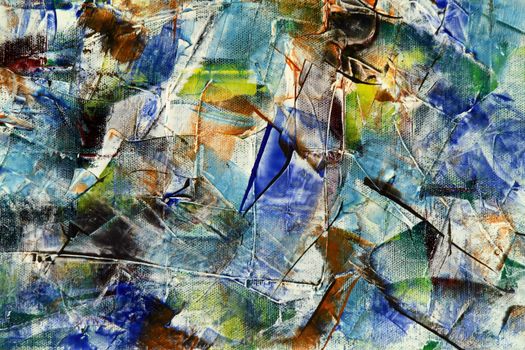
Dynamic abstract expressionist painting with vibrant colors and textured patterns. Photo: Steve A Johnson / Pexels
The question, "what is contemporary art?" often elicits a shrug, a confused stare, or a passionate defense, depending on who you ask. Unlike its predecessor, modern art, which has a relatively defined historical period (roughly 1860s-1970s), contemporary art is a much more fluid and encompassing term. Generally, it refers to art created from the 1960s or 1970s right up to the present moment. This broad timeframe immediately signals a key characteristic: diversity. There isn't one singular style, philosophy, or medium that defines contemporary art; rather, it's a dynamic, ever-evolving landscape that reflects the complexities of our globalized, technologically advanced world. It's less about a specific aesthetic and more about an ongoing conversation, a continuous exploration of what art can be, how it functions, and its role in society. One of the most significant distinctions lies in its relationship with the past. While modern art often sought to break with tradition, contemporary art frequently references, reinterprets, or even critiques historical art forms and societal norms. Artists might appropriate imagery, techniques, or concepts from art history, infusing them with new meanings relevant to today's context. This dialogue with the past, combined with an insatiable appetite for innovation, makes contemporary art incredibly rich and sometimes challenging to categorize. It's a mirror reflecting our current anxieties, hopes, technological advancements, and cultural shifts. It's art that is happening *now*, made by living artists, often engaging directly with the issues of their time. Understanding this temporal and thematic fluidity is the first step in genuinely appreciating its depth. It's not just new art; it's art that is *of its time*, grappling with contemporary existence. For more on how art evolves, explore the history of art movements. This continuous self-reflection and redefinition are what keep the contemporary art scene vibrant and unpredictable, constantly pushing the boundaries of creativity and perception. It's a field where the only constant is change, making it both daunting and incredibly exciting to engage with. The absence of a single, unifying style or manifesto means that artists are free to pursue their individual visions, resulting in an astonishing array of works that defy easy classification. This openness is both a strength and a source of confusion for newcomers, but it ultimately allows for a much richer and more inclusive artistic dialogue.

Key Characteristics and Themes in Contemporary Art
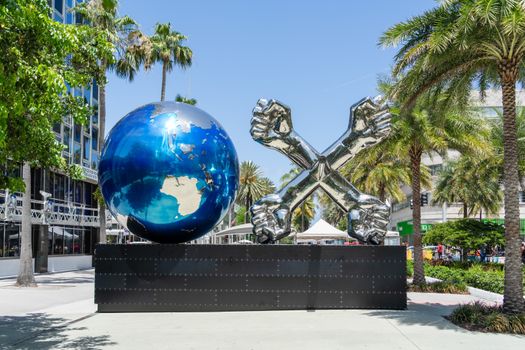
Modern sculpture of globe and fists in Miami Beach, Florida. Photo: Abhishek Navlakha / Pexels
To truly grasp what is contemporary art, one must look beyond aesthetics and delve into its core characteristics and recurring themes. Firstly, contemporary art is profoundly global. The rise of the internet and increased cultural exchange means that artists from every corner of the world contribute to and influence the global art scene. This results in a rich tapestry of perspectives, challenging Eurocentric notions of art and embracing diverse cultural narratives. You'll find art addressing post-colonialism, indigenous rights, and hybrid identities alongside traditional Western themes, all contributing to a more inclusive artistic dialogue. Secondly, contemporary art is inherently conceptual. While technical skill is often present, the idea or message behind the artwork frequently takes precedence. Artists use their chosen medium – be it painting, sculpture, video, performance, or installation – as a vehicle for complex thoughts, social commentary, or emotional expression. This emphasis on concept means that understanding the artist's intent or the context of the work can be crucial to its appreciation. It often requires viewers to think, question, and engage intellectually, rather than simply admire a pretty picture. Thirdly, contemporary art blurs boundaries. The lines between different art forms, and even between art and life, are often deliberately obscured. Performance art might involve audience participation, installations can transform entire spaces, and digital art exists purely in the realm of code and screens. This interdisciplinarity reflects a broader societal trend of breaking down silos and exploring hybrid forms of expression. Artists are free to experiment with materials, technologies, and methodologies that were previously unimaginable, leading to groundbreaking and sometimes controversial works. Finally, engagement with social and political issues is a hallmark of contemporary art. Many artists use their platforms to critique consumerism, environmental degradation, war, inequality, and human rights. Art becomes a powerful tool for activism, raising awareness, and sparking dialogue. This direct engagement with contemporary problems makes the art relevant and urgent, often challenging viewers to confront uncomfortable truths. It's not uncommon to find art that directly responds to current events, making it a living, breathing commentary on our world. These characteristics collectively make contemporary art a dynamic and often provocative force in culture, demanding an active and engaged audience.

Evolution and Impact: From Modern to Contemporary
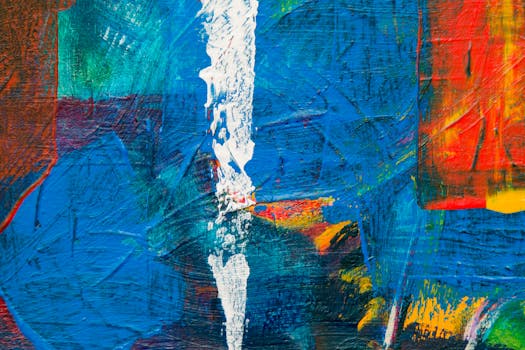
Colorful abstract acrylic painting showcasing vibrant brushstrokes and expressive texture. Photo: Steve A Johnson / Pexels
Understanding the transition from modern art to what is contemporary art is essential for grasping its unique identity. Modern art, spanning roughly the 1860s to the 1970s, was characterized by radical breaks from academic traditions, a focus on individual expression, and the exploration of new visual languages (think Impressionism, Cubism, Surrealism, Abstract Expressionism). While revolutionary for its time, modern art still largely operated within the confines of established art forms like painting and sculpture, albeit in innovative ways. It sought to capture the essence of a rapidly changing industrial world, but often through the lens of a Western, predominantly male, perspective. The shift to contemporary art began as artists started to question the very institutions and definitions of art that modernism had established. Postmodernism, a philosophical and artistic movement that emerged in the mid-20th century, played a significant role in this transition. Postmodern artists often challenged grand narratives, embraced irony, pastiche, and appropriation, and questioned notions of originality and authenticity. This intellectual groundwork paved the way for the radical experimentation seen in contemporary art. Artists moved beyond the canvas and pedestal, incorporating everyday objects (Pop Art), using their bodies (Performance Art), and creating immersive environments (Installation Art). Key events and movements like the rise of feminism in art, the burgeoning LGBTQ+ rights movement, and increasing awareness of global cultures profoundly impacted contemporary art. Artists from marginalized communities gained greater visibility, bringing new perspectives and narratives to the forefront. This expanded the scope of art to address issues of identity, power, and representation in ways that modern art largely did not. The impact of technology also cannot be overstated; video art, digital art, and new media art forms became integral, offering artists unprecedented tools for creation and dissemination. This period marked a fundamental shift from art being primarily about aesthetics or individual genius to art being about ideas, engagement, and its capacity to reflect and shape society. It's a continuous dialogue between the past, present, and future, constantly redefining what it means to create and experience art in a rapidly changing world. To delve deeper into these shifts, consider exploring the impact of digital art on traditional mediums.

Tips for Engaging with Contemporary Art and Common Misconceptions
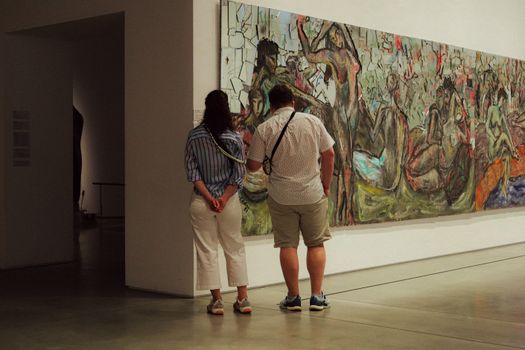
Two adults observe a large abstract painting in a modern art museum gallery. Photo: rana aldemir / Pexels
Engaging with contemporary art can be a deeply rewarding experience, but it often requires a different approach than viewing classical or even modern art. Here are some tips to enhance your appreciation and navigate common misconceptions: **Tips for Engagement:** * **Do Your Homework (Optional):** While not always necessary, a little background research on the artist, the artwork's context, or the themes it addresses can unlock deeper meaning. Many galleries provide excellent wall texts. * **Read the Title and Description:** Don't skip these! They often provide crucial clues about the artist's intent, materials used, or the conceptual framework of the piece. A seemingly simple object might have a profound title that completely alters your perception. * **Ask Questions:** Instead of asking "Is this good art?" try asking "What is the artist trying to communicate?" "How does this make me feel?" or "What societal issue does this address?" Personal interpretation is valid and encouraged. * **Be Open to New Forms:** Don't limit your definition of art to painting and sculpture. Embrace performance, video, sound art, installations, and digital experiences. The medium itself can be part of the message. * **Trust Your Gut:** While intellectual engagement is important, don't dismiss your emotional or visceral reactions. Art is meant to provoke a response, even if it's discomfort or confusion. These feelings are part of the experience. * **Visit Diverse Venues:** Explore contemporary art in various settings – major museums, small independent galleries, artist-run spaces, and public art installations. Each offers a unique perspective. **Common Misconceptions:** * **"My child could do that":** This often dismisses the conceptual rigor, historical awareness, and technical skill that often underpin contemporary works, even those that appear simplistic. The 'idea' is often the artwork. * **"It's just shock value":** While some art does aim to provoke, it's rarely *just* for shock. Often, the provocation serves to highlight a deeper issue or challenge conventional thinking. * **"It has no meaning":** All art has meaning, even if it's abstract or personal. The meaning might not be immediately obvious, or it might be open to multiple interpretations. The artist's intent and your own experience both contribute. * **"It's all about money":** While the art market can be daunting, the vast majority of contemporary artists are driven by passion, not profit. Focus on the art itself, not its market value. * **"I don't get it, so it's bad art":** Contemporary art often asks you to engage, to think, and sometimes to feel uncomfortable. Not 'getting it' immediately doesn't equate to bad art; it might simply mean you haven't found the key to unlock its meaning yet, or it's challenging your preconceived notions. Embrace the journey of discovery.

Comparison

FeatureContemporary ArtModern ArtClassical Art
Time Period1960s/70s - Present1860s - 1970sAncient - 1800s
Primary FocusConcept, Social Commentary, ExperimentationIndividual Expression, Breaking TraditionBeauty, Idealism, Narrative
Key MediumsMixed Media, Installation, Video, Performance, DigitalPainting, Sculpture, CollagePainting, Sculpture, Architecture
Defining TraitGlobal, Diverse, Interdisciplinary, QuestioningAvant-garde, Stylistic Innovation, SubjectivityTechnique, Representation, Order

What Readers Say

"This article completely demystified what is contemporary art for me. I used to feel intimidated, but now I feel equipped to actually engage with pieces at galleries. It's incredibly helpful!"

Sarah J. · Brooklyn, NY

"As an aspiring artist, understanding the nuances between modern and contemporary art was crucial. This piece offers such a clear distinction and a fantastic overview of current trends."

Mark D. · Los Angeles, CA

"I always felt like contemporary art was 'over my head'. After reading this, I visited a local exhibition and actually understood the context and themes, which made the experience so much richer."

Emily R. · Chicago, IL

"While I still find some contemporary pieces challenging, this article provided an excellent framework for approaching them. The tips for engagement are particularly useful for a novice like me."

David L. · Austin, TX

"I'm a seasoned art collector, and even I found new insights here, especially regarding the global influences. It's a well-researched and comprehensive guide to what is contemporary art today."

Maria K. · Miami, FL

Frequently Asked Questions

What is the main difference between modern art and contemporary art?

The primary difference lies in their time periods and core philosophies. Modern art typically refers to art from the 1860s to the 1970s, characterized by a break from tradition and individual expression. Contemporary art, from the 1960s/70s to the present, is more global, conceptual, and often engages with social, political, and technological issues, blurring traditional art boundaries.

Why does contemporary art often seem so confusing or abstract?

Contemporary art can be confusing because it prioritizes concept and message over traditional aesthetics, often using unconventional mediums and challenging established norms. It frequently requires active interpretation and understanding of its social or political context, rather than just passive viewing, which can be unfamiliar to some viewers.

How can I start appreciating contemporary art if I'm a beginner?

Start by visiting local contemporary art galleries and museums. Don't be afraid to read the accompanying texts, which often explain the artist's intent. Approach each piece with an open mind, ask yourself what questions it raises, and be willing to engage with new ideas and unconventional forms. Don't feel pressured to 'like' everything, but try to understand it.

Is contemporary art worth investing in, and how much does it cost?

The value of contemporary art varies wildly. Some pieces by established artists can fetch millions, while emerging artists' works might be very affordable. Investment potential depends on many factors, including the artist's reputation, market trends, and critical acclaim. For most, the 'value' is in the cultural contribution and personal enjoyment, rather than purely financial gain.

How does contemporary art compare to street art or digital art?

Street art and digital art are significant components of contemporary art. Contemporary art is an umbrella term encompassing a vast range of mediums and styles created in the current era. Both street art (like graffiti or murals) and digital art (like NFTs, virtual reality art) are modern forms of expression that fit squarely within the contemporary art movement, often pushing its boundaries.

Who should engage with contemporary art?

Anyone with an open mind and a curiosity about the world should engage with contemporary art. It's for those who enjoy intellectual challenges, appreciate diverse perspectives, and want to understand the cultural conversations of our time. It's not exclusive to art experts; it's for anyone interested in human creativity and its reflection of society.

Are there any 'rules' or standards in contemporary art?

Unlike earlier art periods with strict academic rules, contemporary art famously breaks rules. The primary 'standard' is often the artist's conceptual rigor, the originality of their ideas, and their ability to provoke thought or emotion. There are no fixed stylistic or material rules; experimentation and challenging conventions are often celebrated.

What are the future trends in contemporary art?

Future trends in contemporary art are likely to continue exploring the intersection of art and technology, with increased use of AI, augmented reality, and bio-art. There will also be a growing focus on environmental sustainability in art practices and materials, and a continued emphasis on diverse global narratives and social justice issues, reflecting our evolving world.

Embark on your journey into the fascinating world of contemporary art. By understanding its diverse forms and profound messages, you'll discover a rich landscape of human creativity that reflects and shapes our present. Start exploring today and redefine what art means to you.

Topics: what is contemporary artcontemporary art definitionmodern art vs contemporary artcontemporary art movementsunderstanding contemporary art
Leo List
Brampton weed
Adultwork EstrelaBet Vai de Bet R7 Bet Betão Galera Bet Rainbet Bet9ja Shop SportyBet BetKing Sisal Loto Foot Hollywoodbets YesPlay Odibets RushBet Jugabet BetWarrior BetCity MSport betPawa Fortebet