What is Contemporary Art? A Deep Dive into Modern Expression

A dynamic abstract image featuring vibrant flowing waves in a mix of colors, creating a sense of motion and energy.Photo: Landiva Weber / Pexels

What is Contemporary Art? A Deep Dive into Modern Expression

Explore the vibrant, challenging, and ever-evolving world of contemporary art, understanding its origins, forms, and impact today.

Discover Contemporary Art

Key Takeaways

  • ✓ Contemporary art generally refers to art produced from the 1960s or 1970s to the present day.
  • ✓ It is characterized by its diversity, often incorporating new media, conceptual approaches, and social commentary.
  • ✓ Unlike modern art, contemporary art frequently questions traditional art definitions and embraces a broader range of materials and practices.
  • ✓ Key themes often include identity, globalization, technology, and environmental concerns.

How It Works

1
Define the Era

Understand that 'contemporary' signifies 'of the moment' or 'current,' placing its starting point generally in the post-1960s period. This distinguishes it from 'modern art,' which typically ended by the mid-20th century.

2
Embrace Diverse Forms

Recognize that contemporary art isn't confined to traditional painting and sculpture. It encompasses performance art, video art, installation art, digital art, and various mixed media, reflecting a boundless approach to creation.

3
Look for the Conceptual

Many contemporary artworks prioritize the idea or concept behind the piece over aesthetic beauty or technical skill. Understanding the artist's intent and the questions they pose is often central to appreciating the work.

4
Engage with Themes

Contemporary art frequently addresses pressing societal issues, personal experiences, and global phenomena. Engaging with these themes allows for a deeper connection to the artwork and its relevance to our world.

Unpacking the Definition: What is Contemporary Art?
A woman in green attire viewing minimalist green paintings in an art gallery.Photo: cottonbro studio / Pexels
The term "contemporary art" often sparks confusion, primarily because its definition is as fluid and evolving as the art itself. Unlike historical art periods with clear start and end dates, contemporary art is, by its very nature, always in motion, reflecting the present moment. Generally, it refers to art produced from the late 1960s or early 1970s up to the present day. This temporal distinction is crucial because it sets contemporary art apart from "modern art," which typically concluded in the mid-20th century with movements like Abstract Expressionism. While modern art challenged traditional forms and embraced abstraction, contemporary art takes this questioning a step further, often interrogating the very definition of art, its purpose, and its place in society. At its core, contemporary art is characterized by its incredible diversity, its willingness to experiment with new materials and technologies, and its engagement with current socio-political issues. It's an art form that isn't afraid to be challenging, provocative, or even uncomfortable. Artists working today draw inspiration from an expansive array of sources, incorporating elements from popular culture, science, philosophy, and global events. This means you might encounter everything from a painting on canvas to a video installation, a performance piece, a digital artwork, or an object made from recycled materials. The boundaries are constantly being pushed, and the mediums are as varied as the messages.Explore the diverse world of art and discover how contemporary artists are shaping our visual landscape. One of the defining features of contemporary art is its conceptual nature. While aesthetic appeal can certainly be a component, often the idea or the message behind the artwork is paramount. Artists frequently use their work to provoke thought, initiate dialogue, or critique prevailing norms. This shift in emphasis means that understanding contemporary art often requires more than just looking; it demands engagement, research, and an openness to different perspectives. It’s not always about beauty in the classical sense, but about relevance, impact, and the artist's unique voice. This can be a hurdle for some viewers, accustomed to art that is immediately pleasing to the eye. However, once you embrace the conceptual framework, a whole new world of artistic expression opens up, revealing profound insights into our shared human experience and the complexities of the modern world. It's a conversation, an ongoing dialogue between the artist, the artwork, and the viewer, constantly redefining what art can be.

Key Characteristics and Movements Shaping Contemporary Art

Vibrant modern art installation in an indoor atrium with glass ceiling.Photo: Tahir Xəlfə / Pexels
To truly grasp what is contemporary art, it’s essential to understand its foundational characteristics and the influential movements that have emerged within this broad period. Unlike earlier art historical periods with dominant styles, contemporary art is a tapestry woven from numerous threads, each representing a unique approach or philosophy. One of the most prominent characteristics is its interdisciplinarity. Artists frequently blur the lines between different art forms, incorporating elements of sculpture, painting, photography, film, and performance into a single piece. This hybridization reflects a rejection of traditional categorization and an embrace of boundless creative expression. Technology plays a significant role, with digital art, video art, and interactive installations becoming increasingly common, leveraging new tools to create immersive and dynamic experiences for the audience. Another hallmark is the emphasis on social, political, and environmental commentary. Many contemporary artists use their platforms to address critical issues such as globalization, identity politics, climate change, human rights, and consumerism. Their works often serve as a mirror, reflecting the anxieties, hopes, and complexities of our time. This can make contemporary art highly relevant and impactful, prompting viewers to consider their own roles in these larger narratives. The role of the viewer itself is often redefined; instead of passively observing, the audience might be invited to participate, interact, or contribute to the artwork, making the experience more personal and engaging. This participatory aspect challenges the traditional hierarchy between artist and audience, fostering a more democratic engagement with art. While contemporary art resists neat categorization, several significant movements and tendencies have shaped its trajectory. Postmodernism, though a broader cultural theory, heavily influenced contemporary art by questioning grand narratives, embracing irony, and deconstructing established norms. Conceptual Art, which emerged in the late 1960s, prioritized the idea over the object, often resulting in minimalist or text-based works that required intellectual engagement. Performance Art pushed the boundaries of live experience, using the artist's body as the primary medium. Installation Art transformed spaces into immersive environments, creating experiences rather than just objects. Other notable trends include Feminist Art, which challenged patriarchal structures and explored gender identity; Land Art, which engaged directly with natural landscapes; and more recently, movements exploring digital aesthetics, bio-art, and relational aesthetics, which focuses on human interactions and social contexts. These diverse approaches underscore the dynamic and ever-evolving nature of contemporary artistic practice, making it a rich and constantly surprising field of study and appreciation.

Modern Art vs. Contemporary Art: Understanding the Distinction
Colorful abstract acrylic painting showcasing vibrant brushstrokes and expressive texture.Photo: Steve A Johnson / Pexels
A common point of confusion for many art enthusiasts is distinguishing between modern art and what is contemporary art. While the terms are often used interchangeably in casual conversation, they refer to distinct periods in art history, each with its own characteristics, philosophies, and influential movements. Understanding this distinction is fundamental to appreciating the evolution of artistic expression over the last century and a half. Modern art generally encompasses the period from the 1860s (with Impressionism) to roughly the 1960s. This era was marked by a radical departure from traditional, academic art, which had historically focused on realistic representation, mythological themes, and moral instruction. Modern artists, reacting to the rapidly changing world brought about by industrialization, scientific discovery, and social upheaval, sought new ways to represent reality – or to move beyond it entirely. They experimented with color, form, line, and perspective, giving rise to movements like Cubism, Surrealism, Expressionism, and Abstract Expressionism. Key characteristics of modern art include a focus on abstraction, a celebration of individual expression, and a belief in progress and innovation. Artists like Picasso, Matisse, Dalí, and Pollock pushed the boundaries of what art could be, often prioritizing the emotional or psychological impact of a piece over its literal representation. Modern art was revolutionary, challenging the status quo and redefining aesthetic values. However, by the mid-20th century, many felt that modernism had run its course, that its promises of universal truth and progress had faltered, especially in the wake of global conflicts and societal disillusionment. This paved the way for contemporary art. Contemporary art, as discussed, picks up where modern art left off, typically from the 1960s or 1970s onwards. The most significant difference lies in its philosophical underpinning. While modernism often sought to create new, universal truths through art, contemporary art often questions the very possibility of such truths. It embraces pluralism, irony, and a rejection of grand narratives. Rather than striving for originality in a singular style, contemporary artists frequently appropriate, remix, and comment on existing imagery and ideas. The mediums also differ significantly; while modern art largely remained within painting and sculpture (albeit radically redefined), contemporary art explodes into new forms like video, performance, installation, digital media, and more. Modern art often focused on the internal world of the artist, while contemporary art frequently turns its gaze outward, engaging directly with society, politics, and the viewer. Discover the rich history of art and see how these periods intertwine and diverge. Ultimately, modern art broke the rules, but contemporary art often questions the existence of rules themselves, offering a more open-ended, diverse, and often participatory experience.

Tips for Appreciating and Engaging with Contemporary Art
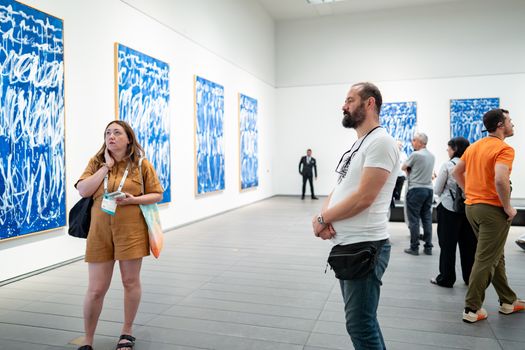
Visitors in an art gallery engaging with blue abstract artworks. Captured indoors with contemporary art, diverse visitors enhancing the scene.Photo: This And No Internet 25 / Pexels
Engaging with what is contemporary art can be a deeply rewarding experience, but it often requires a different mindset than appreciating more traditional forms. Here are some tips to help you navigate and enjoy the diverse world of contemporary art: * **Drop Preconceptions:** Don't go into a gallery expecting classical beauty or easily digestible narratives. Contemporary art often challenges viewers, and an open mind is your best tool for appreciation. Be prepared to see things that might initially confuse or even provoke you. * **Read the Wall Text:** This is perhaps the most crucial tip. Contemporary artworks often come with accompanying labels or texts that explain the artist's intent, the context of the piece, the materials used, and the questions it aims to address. These explanations can unlock the meaning and conceptual depth that might not be immediately apparent. * **Ask Questions:** If you're in a gallery, don't be afraid to ask docents or staff for more information. If you're viewing online, do a quick search about the artist or the specific artwork. Understanding the 'why' behind a piece is often more important than the 'what'. * **Consider the Context:** Art doesn't exist in a vacuum. Think about the social, political, and cultural climate in which the artwork was created. How does it respond to current events or historical narratives? What issues is the artist addressing? * **Embrace Discomfort:** Some contemporary art is designed to challenge, provoke, or even disturb. If a piece makes you feel uncomfortable, ask yourself why. What emotions or thoughts does it trigger? This introspection can be part of the artistic experience. * **Look Beyond the Medium:** Don't get hung up on whether something 'looks' like art. Contemporary artists use everything from discarded everyday objects to advanced digital technologies. Focus on the message, the concept, and the experience rather than just the physical form. * **Visit Diverse Venues:** Explore not just major museums, but also smaller independent galleries, artist-run spaces, and online platforms. This will expose you to a broader range of contemporary practices and emerging artists. * **Engage with the Experience:** Many contemporary works, especially installations and performance art, are meant to be experienced rather than just observed. Allow yourself to be immersed, to walk around, to participate if invited. The interaction is often integral to the art itself. * **Trust Your Own Response:** While context and artist intent are important, your personal response is also valid. You don't have to 'like' every piece, but try to understand why you feel the way you do. Art is a conversation, and your thoughts are part of it. By adopting these approaches, you can transform your engagement with contemporary art from a potentially bewildering experience into an enriching journey of discovery and critical thinking. It's an opportunity to connect with the most current expressions of human creativity and to gain new perspectives on the world around us.

Comparison

FeatureContemporary ArtModern ArtTraditional Art
Time Period1960s/70s - Present1860s - 1960sPre-1860s
Key FocusConcept, Social Commentary, ExperienceAbstraction, Individual Expression, InnovationRepresentation, Narrative, Technical Skill
Primary MediumsMixed Media, Video, Installation, Digital, PerformancePainting, Sculpture (redefined)Painting, Sculpture (classical)
Viewer EngagementOften Participatory, InterpretiveObservational, EmotionalAppreciative, Understanding of Skill

What Our Readers Say

5 ★★★★★

"This article completely demystified what is contemporary art for me! I always felt intimidated, but now I understand the conceptual aspect and feel much more confident visiting galleries. It's truly a helpful guide."

5 ★★★★★

"As an aspiring artist, this deep dive into contemporary art's characteristics and movements was invaluable. It clarified the distinctions between modern and contemporary art perfectly, giving me new perspectives on my own work."

5 ★★★★★

"I used to walk past contemporary art exhibits confused. After reading this, I tried the 'read the wall text' tip and it transformed my experience. I now appreciate the layers of meaning I was missing before!"

4 ★★★★☆

"A very comprehensive overview. While some sections felt a bit dense, the core message about embracing diversity and context was really impactful. It definitely encouraged me to engage more actively with challenging pieces."

5 ★★★★★

"Finally, an article that makes contemporary art accessible! The tips for appreciation are fantastic, especially for someone like me who loves art but often struggles with the 'why' of modern pieces. Highly recommend!"

Frequently Asked Questions

What is the main difference between modern and contemporary art?
The primary distinction is their timeline and philosophical approach. Modern art generally spans from the 1860s to the 1960s, focusing on breaking from tradition, abstraction, and individual expression. Contemporary art, from the 1960s/70s to the present, often questions art's definition, embraces diverse media, and engages with current socio-political issues, prioritizing concept and viewer experience.
Is contemporary art always abstract or difficult to understand?
No, not always. While much contemporary art is conceptual and may not be traditionally beautiful or immediately legible, it encompasses a vast range of styles and themes. Some works are figurative, others are highly narrative. The perceived 'difficulty' often stems from a lack of context, which can usually be overcome by reading accompanying information and engaging with the artist's intent.
How can I start appreciating contemporary art if I'm new to it?
Start by visiting local galleries and museums, making sure to read all the wall texts and artist statements. Don't be afraid to ask questions or research artists online. Embrace an open mind, look for the 'why' behind the art, and understand that your personal response and interpretation are valid parts of the experience.
Does contemporary art have any monetary value, or is it just for intellectual discussion?
Absolutely, contemporary art has significant monetary value, often commanding high prices at auctions and in the art market. Beyond intellectual discussion, it is a thriving economic sector, with collectors, galleries, and institutions actively investing in and promoting contemporary artists. Its value is both cultural and financial.
How does contemporary art compare to street art or graffiti?
While traditionally distinct, the lines between contemporary art and street art (including graffiti) have blurred considerably. Many street artists are now recognized and exhibited in galleries and museums, and contemporary artists often draw inspiration from or incorporate elements of street art into their practice. Both forms often share a critical, public-facing, and boundary-pushing ethos, though their origins and contexts can differ.
Who should engage with contemporary art?
Anyone and everyone! Contemporary art is for individuals curious about the world, interested in new perspectives, and open to challenging their own ideas. It's particularly relevant for those seeking to understand current societal issues, explore diverse cultures, or simply experience the cutting edge of human creativity and innovation.
Are there any risks associated with controversial contemporary art?
The 'risks' of controversial contemporary art are typically intellectual or emotional, not physical. Such art can provoke strong reactions, challenge deeply held beliefs, or even be perceived as offensive by some. However, its purpose is often to spark dialogue and critical thinking, rather than to cause harm. Engaging with it involves a willingness to confront uncomfortable ideas.
What are some future trends expected in contemporary art?
Future trends in contemporary art are likely to continue exploring the intersection of art and technology, with increased use of AI, virtual reality, augmented reality, and blockchain (NFTs). Environmentalism and sustainability will remain central themes, as will art that addresses global inequalities, identity, and the impact of rapid technological and social change. Interactivity and immersive experiences are also expected to grow.

Embark on your journey into the captivating world of contemporary art. By embracing its diversity, conceptual depth, and relevance to our times, you'll discover a rich tapestry of human expression that challenges, inspires, and offers profound insights into the modern condition. Start exploring today and redefine your understanding of art.

Topics: what is contemporary artcontemporary art definitionmodern art vs contemporary artcontemporary art movementshow to understand contemporary art