The Ultimate Art History Timeline: Ancient to Modern
July 27, 2026 17 min read 3,300 words
Journey through millennia of human creativity, understanding the forces that shaped our visual world.
Begin Your Art Journey
Unveiling the Dawn of Creativity: Ancient Art History
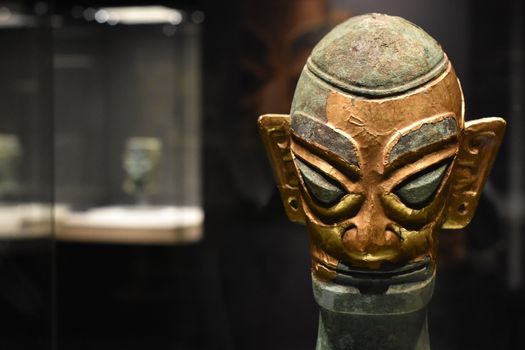 Photo: William Liu / Pexels
The journey through the art history timeline ancient to modern begins not with grand museums, but in the depths of prehistoric caves and the sands of ancient civilizations. This foundational period, spanning from approximately 40,000 BCE to 400 CE, lays the groundwork for all subsequent artistic endeavors. It’s a testament to humanity's innate drive to create, communicate, and leave a lasting mark.
**Prehistoric Art (c. 40,000 – 3,000 BCE):** Our earliest artistic expressions emerged from the Upper Paleolithic era, with iconic cave paintings like those at Lascaux and Altamira. These depictions of animals, hunting scenes, and abstract symbols weren't merely decorative; they likely served ritualistic, magical, or storytelling purposes. Sculptural forms, such as the Venus of Willendorf, suggest early fertility cults and a fascination with the human form, albeit stylized. The materials were simple – natural pigments, carved stone, and bone – yet the impact was profound, signaling the birth of symbolic thought and abstract representation. As humans transitioned to settled agricultural societies in the Neolithic period, art began to reflect community life, with pottery, megalithic structures like Stonehenge, and early architectural forms becoming prominent. These early works were deeply connected to survival, spirituality, and community identity.
**Ancient Near Eastern Art (c. 3,500 – 539 BCE):** The fertile crescent gave rise to the first complex urban societies, and with them, sophisticated art. Mesopotamia, home to Sumerians, Akkadians, Babylonians, and Assyrians, produced cuneiform tablets, cylinder seals, and monumental architecture like ziggurats. Art here often served to glorify rulers, depict religious narratives, and document historical events, characterized by strict conventions and hierarchical scaling. The Code of Hammurabi stele, with its intricate relief carving, exemplifies the blend of law, religion, and art.
**Ancient Egyptian Art (c. 3,100 – 30 BCE):** Perhaps one of the most recognizable ancient art forms, Egyptian art was steeped in religion and the afterlife. Its iconic characteristics – frontality, idealized figures, symbolic colors, and hieroglyphs – remained remarkably consistent for millennia. From the colossal pyramids and intricate tomb paintings to the exquisite gold of Tutankhamun’s treasures, Egyptian art was designed for eternity, intended to guide the deceased into the next life and ensure the prosperity of the living. The Great Sphinx and the portrait bust of Nefertiti are enduring symbols of their mastery of form and symbolism.
**Ancient Greek Art (c. 800 – 31 BCE):** The Greeks revolutionized art by focusing on the ideal human form, rationality, and naturalism. Their architectural achievements, like the Parthenon, showcased their mastery of proportion and order. Sculpture evolved from rigid, stylized 'kouros' and 'kore' figures to dynamic, anatomically precise representations of gods and athletes, culminating in the Classical and Hellenistic periods with masterpieces like the Laocoön Group and the Venus de Milo. Greek pottery, adorned with mythological scenes and daily life, provides invaluable insights into their culture. Greek philosophy and democracy profoundly influenced their aesthetic principles, emphasizing balance, harmony, and the pursuit of perfection.
**Ancient Roman Art (c. 509 BCE – 476 CE):** Rome inherited much from Greece but developed its own distinctive style, emphasizing practicality, empire, and individual portraiture. Roman engineering prowess is evident in their architecture – aqueducts, basilicas, and the Pantheon – which often incorporated concrete and arches. Their sculpture, while initially drawing from Greek ideals, became more realistic and detailed, particularly in portrait busts that captured individual likenesses. Mosaics and frescoes adorned public buildings and private villas, depicting everything from mythological scenes to everyday life. Roman art served as a powerful tool for propaganda, celebrating emperors, military victories, and the vastness of their empire. The Colosseum stands as a testament to their engineering and their penchant for grand public spectacles. This era concludes the ancient phase, paving the way for the dramatic shifts of the medieval period, where religious themes would dominate artistic output.
Discover more about ancient civilizations and their artistic legacies.
From Faith to Humanism: Medieval and Renaissance Art
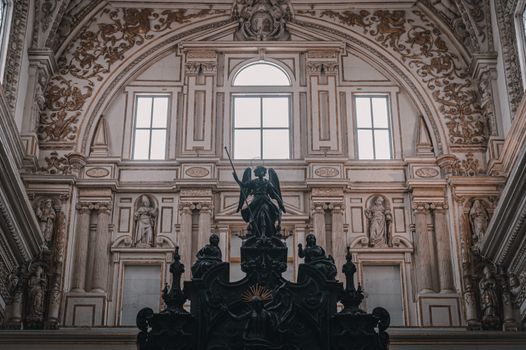 Photo: Zekai Zhu / Pexels
Following the fall of the Roman Empire, the art history timeline ancient to modern entered a period profoundly shaped by religious faith and the shifting power dynamics of emerging European states. This era, broadly spanning from 400 CE to the early 17th century, witnessed a dramatic transformation in artistic purpose and style.
**Early Christian and Byzantine Art (c. 300 – 1453 CE):** As Christianity spread, it became the primary patron of the arts. Early Christian art adapted Roman forms to new sacred purposes, focusing on narratives from the Bible in catacombs and basilicas. The Byzantine Empire, centered in Constantinople, developed a distinct style characterized by shimmering mosaics, iconic religious images, and grand domed churches like the Hagia Sophia. Byzantine art emphasized spiritual transcendence, using gold backgrounds and flattened, elongated figures to convey a sense of otherworldliness rather than earthly realism. Icons, believed to be windows to the divine, played a central role in worship.
**Islamic Art (c. 7th Century CE – Present):** Emerging from the Arabian Peninsula, Islamic art developed a unique aesthetic rooted in the tenets of Islam. Due to an aniconic tradition, figural representation in religious contexts was often avoided, leading to a rich development of calligraphy, geometric patterns, and intricate arabesques. Mosques, palaces, and illuminated manuscripts showcase stunning architectural forms, tilework, and decorative arts across diverse regions, from Spain to India. The Alhambra in Spain and the Taj Mahal in India are iconic examples of Islamic architectural and decorative brilliance.
**Early Medieval and Romanesque Art (c. 500 – 1200 CE):** Following the collapse of Rome, Europe entered a period often referred to as the 'Dark Ages.' Art during this time was largely regional, influenced by Celtic, Germanic, and Viking traditions. Illuminated manuscripts, often created in monasteries, became vital for preserving knowledge and religious texts, characterized by intricate interlace patterns and vibrant colors. The Romanesque period saw a resurgence in monumental stone architecture, particularly churches and cathedrals, featuring thick walls, rounded arches, and robust sculptures that conveyed biblical stories to a largely illiterate populace.
**Gothic Art (c. 1150 – 1500 CE):** The Gothic era revolutionized architecture and art, most famously with its soaring cathedrals like Chartres and Notre Dame. Innovations such as pointed arches, ribbed vaults, and flying buttresses allowed for taller structures and larger stained-glass windows, flooding interiors with divine light. Sculpture became more naturalistic and emotional, adorning cathedral facades. Painting, while still primarily religious, began to show a greater interest in human emotion and narrative detail, moving away from the rigidities of earlier medieval styles.
**The Renaissance (c. 1300 – 1600 CE):** Originating in Italy, the Renaissance marked a profound rebirth of interest in classical antiquity, humanism, and scientific inquiry. Artists like Giotto began to introduce greater naturalism and emotional depth into painting. The Early Renaissance saw masters like Masaccio pioneering linear perspective, while Donatello revived free-standing bronze sculpture. The High Renaissance, with giants like Leonardo da Vinci, Michelangelo, and Raphael, achieved unparalleled mastery of anatomy, perspective, and composition. Da Vinci's 'Mona Lisa' and 'The Last Supper,' Michelangelo's 'David' and the Sistine Chapel ceiling, and Raphael's 'School of Athens' exemplify the era's pursuit of ideal beauty, intellectual depth, and human potential. The Northern Renaissance, influenced by Italian innovations but maintaining distinct traditions, focused on meticulous detail, oil painting, and often more somber religious themes, with artists like Jan van Eyck and Albrecht Dürer. This period fundamentally shifted art's focus from purely spiritual to a celebration of human achievement and the observable world.
Baroque to Revolution: The Age of Grandeur and Enlightenment
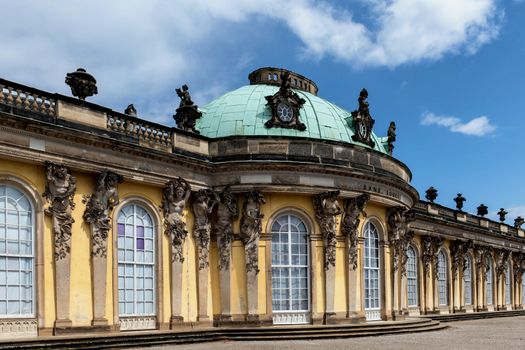 Photo: Wolfgang Weiser / Pexels
The transition from the Renaissance heralded an era of dramatic emotionality, grandeur, and then, a return to classical ideals, all set against a backdrop of religious upheaval, scientific revolution, and political change. This segment of the art history timeline ancient to modern, roughly from the early 17th century to the mid-19th century, is marked by dynamic shifts in style and purpose.
**Baroque Art (c. 1600 – 1750 CE):** Emerging from Italy, Baroque art was a powerful response to the Protestant Reformation, commissioned by the Catholic Church to reassert its authority and inspire awe. It is characterized by intense drama, rich colors, deep shadows (tenebrism), diagonal compositions, and a sense of theatricality and movement. Caravaggio's stark realism and dramatic lighting, Bernini's ecstatic sculptures like 'The Ecstasy of Saint Teresa,' and Rubens's vibrant, energetic canvases exemplify this style. In the Netherlands, artists like Rembrandt and Vermeer developed a distinct Baroque tradition, focusing on portraiture, genre scenes, and still life, often imbued with psychological depth and subtle light. Baroque architecture, with its opulent decoration and sweeping forms, aimed to overwhelm the senses.
Explore the dramatic impact of Baroque art on European culture.
**Rococo Art (c. 1700 – 1789 CE):** A lighter, more playful, and ornamental style, Rococo developed in France as a reaction against the grandeur of the Baroque. It was embraced by the aristocracy for their private residences, featuring delicate pastels, curvilinear forms, and themes of love, leisure, and frivolity. Artists like Watteau and Fragonard depicted idyllic garden parties ('fêtes galantes') and romantic encounters, while interior design became highly elaborate with stucco, mirrors, and intricate carvings. Rococo embodied the elegant and often hedonistic lifestyle of the French court before the revolution.
**Neoclassicism (c. 1750 – 1850 CE):** Inspired by the rediscovery of Pompeii and Herculaneum, and the ideals of the Enlightenment, Neoclassicism represented a return to the perceived purity, order, and civic virtue of ancient Greece and Rome. It reacted against the perceived excesses of Rococo and Baroque. Artists like Jacques-Louis David in France and Antonio Canova in Italy championed clear lines, balanced compositions, and heroic subjects drawn from classical mythology and contemporary history, often imbued with moralizing messages. David's 'Oath of the Horatii' is a prime example, embodying sacrifice and duty. Architecture also embraced Neoclassical principles, seen in public buildings and monuments in Europe and the newly formed United States, emphasizing symmetry, columns, and domes.
**Romanticism (c. 1800 – 1850 CE):** Emerging partly as a counter-movement to the rationalism of Neoclassicism, Romanticism emphasized emotion, individualism, the sublime in nature, and the exotic. Artists like Eugène Delacroix explored dramatic narratives, vibrant colors, and dynamic compositions, often depicting historical events, literature, and distant lands. J.M.W. Turner and Caspar David Friedrich captured the awe-inspiring power of nature, evoking feelings of wonder, terror, and spiritual introspection. Goya, particularly in his later works, delved into the darker aspects of human nature and the horrors of war. Romanticism celebrated intuition, imagination, and the subjective experience, paving the way for the radical changes that would define the modern era. This period laid the groundwork for artists to prioritize personal expression over adherence to established norms, a fundamental shift that continues to resonate in contemporary art.
The Modern Era: Innovation, Disruption, and Pluralism
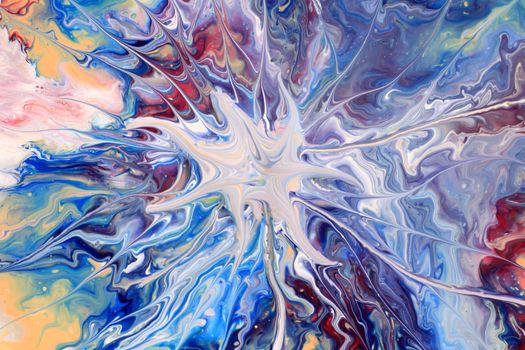 Photo: Landiva Weber / Pexels
The art history timeline ancient to modern culminates in an explosion of movements and radical departures from tradition, beginning in the mid-19th century and extending to the present day. This period is characterized by rapid change, a questioning of established norms, and an unprecedented diversity of styles and media.
**Realism and Impressionism (c. 1850 – 1900 CE):** Realism, championed by artists like Gustave Courbet, focused on depicting everyday life and ordinary people without idealization, often with a social commentary. It challenged academic conventions and the romanticized subjects of previous eras. Impressionism, emerging in the 1870s, was a revolutionary movement that sought to capture fleeting moments and the effects of light and color. Artists like Claude Monet, Pierre-Auguste Renoir, and Edgar Degas broke from traditional academic painting, using visible brushstrokes and bright palettes to convey sensory experience rather than precise detail. Their focus on light, atmosphere, and subjective perception forever changed the course of painting.
**Post-Impressionism and Symbolism (c. 1880 – 1910 CE):** Building on Impressionism but moving in more personal directions, Post-Impressionists like Vincent van Gogh, Paul Cézanne, and Paul Gauguin explored emotional expression, structural form, and symbolic meaning. Van Gogh's intense colors and expressive brushwork, Cézanne's analytical approach to form, and Gauguin's exotic symbolism laid foundations for future avant-garde movements. Symbolism, a broader movement, sought to express ideas and emotions through symbolic imagery, often mystical or psychological.
**Early 20th Century Avant-Gardes (c. 1905 – 1940s):** The early 20th century witnessed a rapid succession of groundbreaking movements. Fauvism (Henri Matisse) prioritized vibrant, non-naturalistic color; Cubism (Pablo Picasso, Georges Braque) shattered traditional perspective, representing objects from multiple viewpoints; Expressionism (Ernst Ludwig Kirchner, Franz Marc) conveyed intense emotion and subjective experience through distorted forms and vivid colors; Futurism celebrated technology, speed, and modernity; and Surrealism (Salvador Dalí, René Magritte) explored the subconscious mind through dreamlike imagery. These movements collectively dismantled centuries of artistic conventions.
**Mid-20th Century to Contemporary Art (c. 1940s – Present):** After World War II, New York emerged as a new center of the art world. Abstract Expressionism (Jackson Pollock, Mark Rothko) emphasized spontaneous, gestural, or color-field abstraction, reflecting deep psychological states. Pop Art (Andy Warhol, Roy Lichtenstein) reacted against Abstract Expressionism by incorporating imagery from popular culture and consumerism. Minimalism (Donald Judd, Carl Andre) sought extreme simplicity and essential forms. Conceptual Art (Sol LeWitt) prioritized ideas over aesthetic objects, while Performance Art and Installation Art expanded the boundaries of what art could be.
Contemporary art is characterized by its pluralism – a vast array of styles, media, and approaches coexisting. Artists engage with social, political, and environmental issues, utilizing digital media, video, photography, and mixed media alongside traditional forms. There's a constant dialogue with art history, often reinterpreting or critiquing past movements. The emphasis is often on the viewer's experience, the artist's concept, and the context of the work. This ongoing evolution ensures that art remains a vital, dynamic reflection of human experience, continuously challenging perceptions and pushing creative boundaries. Understanding this complex trajectory helps us appreciate the richness and diversity of human expression across time.
