Mastering the Canvas: How to Start Painting for Beginners

Top view of colorful paint tubes and blank canvas on a wooden surface.Photo: Tara Winstead / Pexels

Mastering the Canvas: How to Start Painting for Beginners

Embark on your artistic journey with confidence and joy, transforming blank canvases into vibrant expressions.

Start Painting Today!

Key Takeaways

  • ✓ You don't need natural talent to start painting; practice and passion are key.
  • ✓ Acrylics are often recommended for beginners due to their versatility and quick drying time.
  • ✓ Starting with basic shapes and color mixing exercises builds fundamental skills.
  • ✓ Embrace imperfections; every stroke is a part of your unique artistic development.

How It Works

1
Gather Your Essential Supplies

Acquire basic paints, brushes, a palette, and a surface like canvas or paper. Starting simple prevents overwhelm and keeps costs down.

2
Understand Basic Color Theory

Learn about primary, secondary, and tertiary colors, and how to mix them. This knowledge is fundamental for creating harmonious palettes.

3
Experiment with Simple Techniques

Practice brushstrokes, washes, and layering on scrap material. This builds muscle memory and helps you understand how the paint behaves.

4
Choose a Simple Subject and Start

Pick an easy reference photo or still life, and don't aim for perfection. The goal is to enjoy the process and learn from each attempt.

Unlocking Your Inner Artist: Why Now is the Time to Start Painting

Female artist deeply engaged in painting at her creative studio workspace.Photo: Andrea Piacquadio / Pexels
Have you ever looked at a beautiful painting and thought, "I wish I could do that"? The good news is, you absolutely can! Painting is not an exclusive club for the 'naturally talented.' It's a skill, a craft, and an incredibly rewarding journey that anyone can embark on, regardless of their prior experience or perceived artistic ability. This comprehensive guide is designed specifically for you, the aspiring artist who wants to learn how to start painting for beginners. We'll demystify the process, break down barriers, and provide you with a clear roadmap to unleash your creativity. Many people hesitate to start painting because they fear failure, believe they lack talent, or are simply overwhelmed by the sheer volume of information and supplies available. Let's debunk these myths right now. Painting is about exploration, expression, and enjoying the process. There's no 'right' or 'wrong' way to paint, only different styles and techniques waiting to be discovered. The benefits of painting extend far beyond creating beautiful images; it's a powerful stress reliever, a mindfulness practice, and a fantastic way to boost your problem-solving skills and hand-eye coordination. It encourages you to see the world differently, noticing nuances of light, shadow, and color you might have previously overlooked. Our goal here is to make your entry into the world of painting as smooth and enjoyable as possible. We'll guide you through selecting your first set of supplies without breaking the bank, understanding basic color theory, mastering fundamental brushstrokes, and tackling your very first canvases. Think of this as your personal art mentor, providing encouragement and practical advice every step of the way. We believe that everyone has an artist within them, and with the right guidance, you can bring that artist to life. This article will serve as your foundational resource, giving you the confidence and knowledge needed to pick up a brush and start creating. So, take a deep breath, let go of any self-doubt, and get ready to discover the incredible joy of painting. Explore more art forms to broaden your creative horizons. Beyond the personal benefits, painting can also be a wonderful way to connect with others. Art communities, both online and offline, are vibrant places where you can share your work, receive constructive feedback, and be inspired by fellow artists. Don't underestimate the power of a supportive environment when you're just starting out. It can provide motivation, new perspectives, and a sense of belonging that fuels your creative spirit. Remember, every master artist was once a beginner, and their journey started with that very first stroke. Your journey starts now.

Essential Supplies for the Beginner Painter: What You Really Need
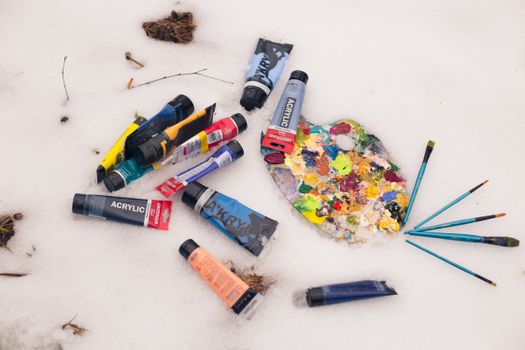
Colorful acrylic paint tubes and palette with brushes lying on a snow surface, artistic winter theme.Photo: Monika Szypuła-Bilska / Pexels
One of the biggest hurdles for anyone learning how to start painting for beginners is figuring out what supplies to buy. The art store can be an intimidating place, filled with countless options and price points. The good news is, you don't need to mortgage your house to get started! We'll focus on the absolute essentials, ensuring you have enough to experiment without feeling overwhelmed or overspending. The key is to start with quality basics that will give you a good experience, rather than the cheapest options that might frustrate you. First up, paints. For beginners, acrylic paints are highly recommended. They are water-soluble, meaning easy cleanup with soap and water, and they dry relatively quickly, allowing for layering without long waits. They are also versatile and can be used on various surfaces. You don't need a huge set; a basic primary palette (red, blue, yellow) plus black and white will allow you to mix a vast array of colors. Look for student-grade acrylics; they are more affordable than professional-grade but still offer good pigment and consistency. Brands like Liquitex Basics, Golden Open, or Winsor & Newton Galeria are excellent choices. Next, brushes. Don't buy a giant set with 50 brushes. You'll likely only use a handful. For starters, invest in 3-5 good quality synthetic brushes: a small round brush for details, a medium flat or bright brush for broader strokes and filling areas, and a larger wash brush for backgrounds. Synthetic brushes are durable and work well with acrylics. A palette is essential for mixing colors. A simple plastic palette with wells, a ceramic plate, or even a waxed paper plate will do the trick. As you progress, you might consider a stay-wet palette for acrylics, which keeps them workable longer. Surfaces to paint on are also crucial. Canvas panels or stretched canvases are popular, but don't feel restricted. For practice, heavy paper (like watercolor paper or mixed-media paper at 90lb/180gsm or higher) is perfect and much more affordable. You can also experiment with cardboard, wood panels, or even old ceramic tiles. A water container (an old yogurt cup or jar works perfectly) for rinsing brushes and a roll of paper towels or an old rag for wiping them clean complete your basic kit. With these few items, you're well-equipped to dive into the world of painting without unnecessary clutter or expense. Remember, the focus is on learning and enjoying the process, not on accumulating the most expensive gear.

Mastering Basic Techniques: Your First Strokes and Color Mixing
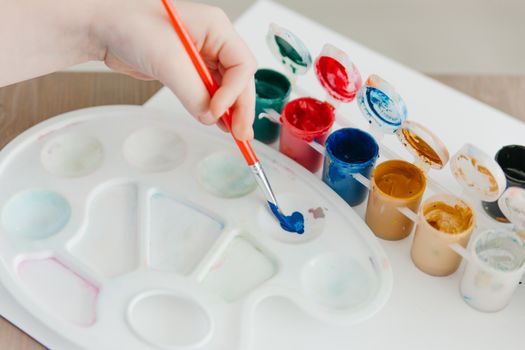
Close-up of a hand painting with vibrant acrylic colors on a palette, showcasing artistic creativity.Photo: Anastasia Shuraeva / Pexels
Now that you have your supplies, it's time to get your hands (and brushes!) dirty. Learning how to start painting for beginners involves understanding some fundamental techniques that will serve as the building blocks for all your future artwork. Don't expect perfection from day one; the goal here is to experiment, observe, and get a feel for how the paint and brushes interact with your chosen surface. Practice is paramount, and every stroke, even an 'imperfect' one, contributes to your growth as an artist. Let's begin with brush control. Hold your brush like a pencil, but don't grip it too tightly. Experiment with applying different amounts of pressure to see how it affects the line or stroke. Try making long, continuous lines, short choppy strokes, and varying the thickness. Practice creating washes – thin, translucent layers of color – by adding a little water to your paint. Then, try layering. Apply one color, let it dry (a huge advantage of acrylics!), and then paint another color on top. Observe how the top layer might subtly interact with or completely cover the bottom. This layering technique is fundamental for building depth and texture in your paintings. Color mixing is another critical skill. With your primary colors (red, blue, yellow) plus black and white, you can create an astonishing range of hues. Start by mixing small amounts of two primary colors to create secondary colors (red + yellow = orange; blue + yellow = green; red + blue = purple). Then, add white to lighten colors (creating tints) and black to darken them (creating shades). You can also mix a tiny bit of the complementary color (opposite on the color wheel) to dull down or neutralize a color. Keep a small swatch of each mixed color on your palette or a scrap piece of paper so you can refer back to them. Understanding color theory is like learning the alphabet of painting; it allows you to 'write' visually. Discover color theory resources to deepen your understanding. Don't be afraid to make mistakes – they are invaluable learning opportunities. If a color mix doesn't work, try again. If a stroke goes awry, either paint over it once it's dry or consider it a happy accident that might lead you in a new, unexpected direction. The beauty of acrylics is their forgiving nature. Embrace this experimental phase, and remember that every artist, no matter how seasoned, continues to learn and refine these basic techniques throughout their career. Your first paintings might not be masterpieces, but they will be essential steps on your artistic journey.

Common Mistakes to Avoid and Tips for Consistent Progress
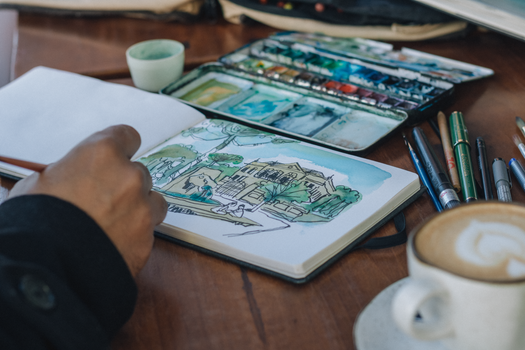
An artist sketching a landscape in a notebook with watercolors, coffee nearby.Photo: Mayara Caroline Mombelli / Pexels
Embarking on your painting journey as a beginner is exciting, but it's easy to fall into common pitfalls that can lead to frustration. Knowing how to start painting for beginners effectively means not just learning what to do, but also understanding what to avoid. By sidestepping these common mistakes, you can maintain your motivation and ensure a more positive and productive learning experience. One of the most frequent errors is trying to achieve perfection too soon. Beginners often compare their initial attempts to the work of seasoned artists, leading to discouragement. Remember, art is a journey, not a race. Your first paintings are for learning, not for gallery display. Embrace the process, celebrate small victories, and understand that skill develops over time with consistent practice. Another mistake is using too much paint or water at once, particularly with acrylics. Too much water can make acrylics behave like watercolors, losing their opacity and vibrancy, while too much paint can lead to muddy colors or an overly thick, unworkable texture. Start with small amounts and add more as needed. Neglecting brush care is another common oversight. Dried paint on brushes can ruin them quickly. Always clean your brushes thoroughly with soap and water immediately after use. Shape the bristles back to their original form before letting them dry flat or hanging them brush-head down. Proper brush care extends their lifespan and ensures they perform well. Furthermore, many beginners skip the crucial step of practicing basic shapes and lines. Jumping straight into complex subjects without understanding foundational elements can be overwhelming. Dedicate time to sketching simple forms, understanding perspective, and practicing different brushstrokes before tackling elaborate scenes. Here are some tips for consistent progress: * **Start with reference photos:** Don't feel pressured to paint from imagination right away. Using a clear reference photo for your subject helps you focus on technique, color matching, and composition without the added stress of inventing everything. * **Work in good lighting:** Natural light is ideal, but if unavailable, use a neutral white light source. Poor lighting can distort colors and make it difficult to see what you're truly painting. * **Take breaks:** Step away from your painting periodically. This allows you to return with fresh eyes and spot areas that need adjustment or improvement. * **Don't overmix colors:** While color mixing is vital, overmixing can lead to dull, muddy colors. Aim for distinct, vibrant mixes. * **Keep a sketchbook:** Use a sketchbook to jot down ideas, practice quick sketches, or test color palettes before committing to your canvas. * **Learn from your mistakes:** Instead of getting discouraged, analyze what went wrong. Did you use too much water? Was the color wrong? This analytical approach turns errors into valuable lessons. * **Enjoy the process:** Above all, remember why you started. Painting should be a source of joy and relaxation. Don't let self-criticism or perceived failures overshadow the intrinsic pleasure of creating. By being mindful of these common pitfalls and incorporating these tips, you'll set yourself up for a fulfilling and continuously improving painting experience.

Comparison

FeatureAcrylic PaintsOil PaintsWatercolor Paints
Drying TimeFast (minutes)Slow (days/weeks)Fast (minutes)
CleanupWater & SoapSolvents (Turpentine)Water & Soap
Opacity/TransparencyOpaque to TransparentOpaque to TransparentMostly Transparent
Beginner Friendliness
Cost (Student Grade)ModerateModerate to HighLow to Moderate
Surface VersatilityHigh (canvas, paper, wood)Medium (canvas, wood)Low (paper)
Layering AbilityExcellent (once dry)Excellent (wet-on-wet)Limited (can reactivate)
OdorLowHighLow

What Our Readers Say

5 ★★★★★

"This guide truly demystified how to start painting for beginners. I was overwhelmed before, but now I feel confident picking up a brush. The supply list was perfect and saved me money!"

5 ★★★★★

"I've always wanted to paint but never knew where to begin. This article broke down the process into manageable steps, making how to start painting for beginners seem achievable and fun."

5 ★★★★★

"Following these tips, I completed my first small landscape painting, which I never thought I could do! The advice on color mixing was particularly helpful in achieving vibrant results."

4 ★★★★☆

"Great comprehensive resource for beginners. While some parts felt a bit basic, the tips on avoiding common mistakes were invaluable for someone like me who tends to get frustrated easily. Highly recommend for anyone curious about how to start painting for beginners."

5 ★★★★★

"As a retired individual looking for a new hobby, this guide on how to start painting for beginners was a godsend. It's so calming and enjoyable, I've already bought more canvases!"

Frequently Asked Questions

What is the absolute best type of paint for beginners?
Acrylic paints are widely considered the best choice for beginners. They are versatile, water-soluble for easy cleanup, dry quickly allowing for layering, and are generally less toxic than oils. Their forgiving nature makes them ideal for experimentation without long waiting times.
I have no artistic talent. Can I really learn to paint?
Absolutely! Talent is often just developed skill and consistent practice. Painting is a learnable skill, much like playing an instrument or learning a new language. With patience, practice, and the right guidance, anyone can learn to paint and enjoy the creative process, regardless of perceived initial 'talent'.
How do I choose my first painting subject?
Start with something simple and meaningful to you. A still life of a single fruit, a simple landscape from a photo, or even abstract color swatches are great starting points. Avoid overly complex scenes or portraits until you've built confidence in basic techniques.
How much should I expect to spend on beginner painting supplies?
You can start painting for as little as $30-$50 for a basic set of student-grade acrylics, a few brushes, a palette, and some paper or small canvases. Avoid expensive 'professional' sets initially; quality student-grade materials offer excellent value for learning.
Is painting with watercolors similar to acrylics for beginners?
While both use water for cleanup, their application and behavior differ significantly. Watercolors are primarily transparent and rely on layering washes, while acrylics can be opaque and built up in thicker layers. Acrylics are generally more forgiving for beginners as mistakes can often be painted over.
Who specifically benefits from learning how to start painting for beginners?
Anyone looking for a creative outlet, a stress-relieving hobby, a way to express themselves, or to improve focus and fine motor skills will benefit. It's perfect for individuals of all ages who are curious about art but don't know where to begin.
Are there any safety concerns I should be aware of when painting?
For beginners using acrylics, safety concerns are minimal. Ensure good ventilation, especially if you're sensitive to odors, and avoid ingesting paints. Always clean brushes and hands thoroughly after painting. If using oil paints later, be mindful of solvents and their fumes.
What's the next step after mastering the basics of how to start painting for beginners?
After mastering the basics, you can explore different painting styles (e.g., impressionism, abstract), experiment with other mediums (oils, watercolors), take online courses or local workshops, or delve deeper into advanced color theory and composition. The art world is vast and full of continued learning opportunities!

Ready to unlock your artistic potential? This guide provides everything you need to know about how to start painting for beginners. Pick up a brush today and embark on a rewarding journey of creativity and self-expression. Your canvas awaits!

Topics: how to start painting for beginnersbeginner painting tipspainting supplies for beginnerseasy painting techniquesfirst painting steps