Unveiling the Rich History of Renaissance Art
August 23, 2026 15 min read 2,975 words
Journey through the pivotal artistic movement that reshaped human perception and creativity forever.
Begin Your Journey
The Dawn of a New Era: Origins and Early Renaissance
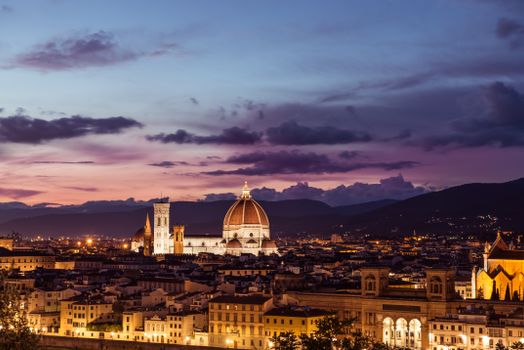 Photo: Magic K / Pexels
The history of Renaissance art is intrinsically linked to the broader cultural and intellectual movement known as the Renaissance, meaning 'rebirth' in French. This transformative period emerged in Italy during the 14th century, blossoming fully in the 15th and 16th centuries, before spreading across Europe. It marked a profound shift from the medieval worldview, which often emphasized the spiritual and the afterlife, towards a renewed interest in classical antiquity—the art, philosophy, and literature of ancient Greece and Rome. This 'rebirth' was not merely an imitation but a reinterpretation and advancement of classical ideals, infused with Christian spirituality and a burgeoning sense of human potential.
Florence, Italy, is widely considered the cradle of the Renaissance. The city's economic prosperity, fueled by banking and trade, created a wealthy merchant class eager to patronize the arts. Families like the Medici became instrumental in fostering artistic innovation, commissioning grand public works and private collections that showcased their power and sophistication. This patronage was a critical catalyst, allowing artists to experiment and develop new techniques without the sole constraints of ecclesiastical commissions. The intellectual current of humanism, which championed human achievement and individual dignity, also played a pivotal role. Humanist scholars rediscovered ancient texts, promoting a focus on earthly life, reason, and empirical observation. This philosophical bedrock encouraged artists to depict the human form with unprecedented naturalism and emotional depth.
Early Renaissance art, roughly spanning from 1400 to 1490, laid the foundational groundwork for the later masterpieces. Artists like Masaccio revolutionized painting with his pioneering use of linear perspective, giving his frescoes a convincing sense of three-dimensional space and volume. His work in the Brancacci Chapel, such as 'The Tribute Money,' showcased figures with a newfound weight and realism, departing sharply from the flatter, more symbolic representations of the Gothic era. Donatello, a contemporary sculptor, brought classical realism back to sculpture, evident in his bronze 'David,' the first freestanding nude male sculpture since antiquity, demonstrating contrapposto and a powerful psychological intensity. Architects like Filippo Brunelleschi, famed for the dome of Florence Cathedral, studied Roman ruins to reintroduce classical architectural principles, emphasizing symmetry, proportion, and harmony. These early masters were not just skilled artisans; they were innovators, scientists, and philosophers, pushing the boundaries of what art could achieve and setting the stage for the glorious High Renaissance. The meticulous study of anatomy, light, and mathematical principles became central to their artistic practice, transforming art from a craft into a sophisticated intellectual pursuit. Understanding these formative years is crucial to appreciating the full scope of the
evolution of art during this period. The confluence of economic prosperity, philosophical humanism, and groundbreaking artistic innovation made the Early Renaissance a truly revolutionary period in the history of art.
The Golden Age: High Renaissance and its Masters
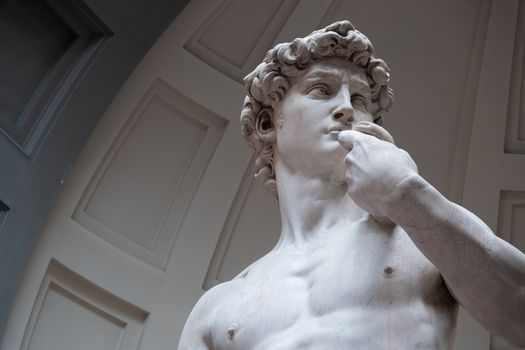 Photo: Raffaella Troiano / Pexels
The High Renaissance, generally dated from the late 1490s to the 1520s, represents the pinnacle of artistic achievement during this period, characterized by a profound sense of harmony, balance, and idealized beauty. This brief but intensely productive era saw the emergence of three towering figures whose names are synonymous with artistic genius: Leonardo da Vinci, Michelangelo Buonarroti, and Raphael Sanzio. Their collective works epitomize the ideals of the Renaissance, pushing the boundaries of naturalism, emotional expression, and technical mastery to unprecedented levels.
Leonardo da Vinci, the quintessential 'Renaissance Man,' embodied the era's spirit of inquiry and innovation. His insatiable curiosity led him to master not only painting but also sculpture, architecture, music, science, invention, and anatomy. In his art, Leonardo perfected techniques like 'sfumato,' a soft, hazy blurring of lines and colors that creates a subtle transition between tones, giving his figures a lifelike, ethereal quality. His masterpiece, the 'Mona Lisa,' is perhaps the most famous painting in the world, renowned for its enigmatic smile and the psychological depth of its subject. 'The Last Supper,' a monumental fresco in Milan, revolutionized narrative painting, capturing a moment of intense drama and human emotion with unparalleled psychological insight and compositional brilliance. Leonardo's anatomical studies, meticulously detailed and scientifically accurate, directly informed his ability to render the human form with such profound realism.
Michelangelo, another titan of the age, viewed himself primarily as a sculptor, believing that the artist's role was to liberate the form already inherent within the stone. His 'David,' carved from a single block of marble, is a breathtaking example of idealized human form, imbued with heroic strength and contemplative intensity. The Sistine Chapel ceiling, commissioned by Pope Julius II, remains one of the most ambitious and awe-inspiring artistic feats in history. Over four years, Michelangelo painted intricate scenes from Genesis, populating the vast ceiling with powerful, anatomically perfect figures that conveyed immense spiritual and emotional weight. His later work, such as 'The Last Judgment' on the Sistine Chapel's altar wall, showcased a more dramatic and emotionally charged style, foreshadowing the complexities of Mannerism.
Raphael, though dying young at 37, left an indelible mark on the High Renaissance with his serene and harmonious compositions, known for their clarity, beauty, and graceful figures. His Madonnas, like the 'Sistine Madonna,' are celebrated for their tender humanity and idealized beauty. Raphael's frescoes in the Vatican's Stanze della Segnatura, particularly 'The School of Athens,' represent the philosophical and artistic ideals of the Renaissance. This monumental work depicts a gathering of ancient Greek philosophers, rendered with perfect perspective and harmonious arrangement, celebrating the pursuit of knowledge and truth. Together, these three masters defined the High Renaissance, creating works that continue to inspire and captivate audiences centuries later, solidifying their place as pivotal figures in the history of art.
Beyond Italy: Northern Renaissance and its Unique Contributions
 Photo: Magda Ehlers / Pexels
While the Italian Renaissance captivated the world with its classical revival and monumental works, a distinct and equally significant artistic movement flourished simultaneously in Northern Europe, known as the Northern Renaissance. While sharing the broader spirit of intellectual curiosity and humanism, artists in regions like Flanders, the Netherlands, Germany, and France developed their unique characteristics, often diverging in their thematic concerns and artistic techniques from their Italian counterparts. The Northern Renaissance placed a greater emphasis on meticulous detail, rich symbolism, and a profound sense of realism in everyday life, often with a deeply religious undertone.
One of the defining features of the Northern Renaissance was the innovative use of oil paint. While oil painting existed in Italy, Northern artists, particularly Jan van Eyck, are credited with perfecting the medium. Oil paints allowed for unprecedented luminosity, depth of color, and the ability to render minute details with astonishing precision. This enabled artists to capture textures, light, and reflections with a realism that fresco or tempera could not match. Van Eyck's 'Arnolfini Portrait' is a prime example, where every fold of fabric, every strand of hair, and every reflection in the convex mirror is rendered with breathtaking accuracy, imbued with layers of symbolic meaning.
Another key distinction was the thematic focus. While Italian artists often drew inspiration from classical mythology, heroic narratives, and idealized human forms, Northern artists frequently depicted religious scenes with a more intimate, humanized approach, set within contemporary domestic interiors or landscapes. They also embraced genre scenes, portraits of merchants and burghers, and still lifes, reflecting the growing prosperity and changing social structures of their regions. The realism was not just about technical skill but also about conveying moral messages and spiritual truths through tangible, relatable imagery.
Prominent Northern Renaissance artists include Jan van Eyck, Rogier van der Weyden, and Hieronymus Bosch from the Low Countries, and Albrecht Dürer and Hans Holbein the Younger from Germany. Van der Weyden's 'Descent from the Cross' exemplifies the intense emotionalism and dramatic composition characteristic of the Flemish school. Hieronymus Bosch, with his fantastical and often unsettling imagery in works like 'The Garden of Earthly Delights,' explored complex moral and theological themes with a unique, surreal vision, offering a stark contrast to the harmonious compositions of the Italian masters. Albrecht Dürer, a master printmaker and painter, brought a scientific rigor to his art, studying perspective and human proportion, while also producing highly detailed engravings that disseminated Northern artistic styles across Europe. His 'Melencolia I' is a masterpiece of intellectual and symbolic complexity. Hans Holbein the Younger, known for his incisive portraits, captured the individual personalities of his subjects, including King Henry VIII and his court, with remarkable psychological depth. The Northern Renaissance, with its distinct approach to realism, symbolism, and medium, provided a rich counterpoint to the developments in Italy, showcasing the diverse and multifaceted nature of the
European art movements of the period. Its profound influence on subsequent art history, particularly in areas like portraiture and genre painting, cannot be overstated, solidifying its essential place in the history of Renaissance art.
Legacy and Lasting Impact of Renaissance Art
 Photo: Jeswin Thomas / Pexels
The influence of Renaissance art extended far beyond its chronological boundaries, profoundly shaping the trajectory of Western art for centuries and establishing many of the aesthetic and technical principles that would define artistic practice until the advent of modernism. The innovations of the Renaissance were so fundamental that they became the academic standard, taught in art academies and studios across Europe, solidifying its status as a cornerstone of art history.
One of the most enduring legacies is the establishment of linear perspective. This mathematical system for creating the illusion of depth on a two-dimensional surface, pioneered by Brunelleschi and codified by artists like Alberti, fundamentally changed how artists conceived of space. It became a standard tool, allowing for realistic and convincing pictorial narratives that invited the viewer into the artwork. The meticulous study of human anatomy, championed by artists like Leonardo and Michelangelo, led to an unprecedented understanding and depiction of the human form. This naturalism became the benchmark for figurative art, emphasizing the beauty, strength, and emotional capacity of the human body. The concept of the artist as an intellectual, a genius, rather than merely a skilled artisan, also emerged during the Renaissance. Figures like Leonardo and Michelangelo were revered not just for their technical prowess but for their inventive minds and profound understanding of various disciplines.
The Renaissance also saw the rise of new genres and themes. While religious art remained dominant, portraiture gained significant prominence, reflecting the humanist emphasis on individual identity. Landscapes and mythological scenes also became more common, paving the way for later developments in these genres. The High Renaissance ideals of harmony, balance, and idealized beauty continued to inspire subsequent movements such as Baroque and Neoclassicism, even as these movements developed their own distinct styles. Baroque art, for instance, took the dramatic intensity and emotionalism of late Renaissance masters like Michelangelo and amplified it, while Neoclassicism later sought to return to the perceived purity and order of the classical and High Renaissance forms.
The impact was not confined to Europe. As European powers expanded globally, so too did the influence of Renaissance artistic conventions, shaping art forms and architectural styles in newly colonized territories and beyond. Even today, the masterpieces of the Renaissance continue to draw millions to museums worldwide, speaking to the universal appeal of their beauty, technical mastery, and profound humanistic messages. The art of this period remains a vital source of study for artists, historians, and enthusiasts alike, offering timeless insights into human creativity, aspiration, and the enduring power of visual expression. The history of Renaissance art is not just a chapter in art history; it is a testament to a pivotal moment when humanity rediscovered itself through the lens of unparalleled artistic innovation and beauty, leaving an indelible mark on global culture.
**Tips for Deepening Your Appreciation of Renaissance Art:**
* **Visit Museums:** Experience the art firsthand. Many major museums in the US (e.g., Metropolitan Museum of Art, National Gallery of Art) have extensive Renaissance collections.
* **Read Primary Sources:** Explore writings by Vasari, Alberti, and Cennini for contemporary insights.
* **Study Techniques:** Learn about linear perspective, sfumato, and chiaroscuro to understand the artists' methods.
* **Consider the Patronage:** Understand who commissioned the works and why, as this often influenced themes and scale.
* **Look for Symbolism:** Renaissance art is often rich with hidden meanings and allegories. Research the iconography to uncover deeper layers of interpretation.
