
Exploring Different Types of Art Styles

A diverse artist painting a model in a sunlit studio, showcasing creativity and diversity.Photo: KATRIN BOLOVTSOVA / Pexels

Exploring Different Types of Art Styles

Unravel the rich tapestry of artistic expression, discover diverse styles, and deepen your understanding of visual culture.

Start Your Artistic Journey

Key Takeaways

  • ✓ Art styles are defined by distinct characteristics in form, technique, and philosophy.
  • ✓ Understanding art styles enhances appreciation and critical analysis of artworks.
  • ✓ Many modern art styles emerged as reactions to or extensions of previous movements.
  • ✓ Regional and cultural influences profoundly shape the development of art styles.

How It Works

1
Identify Key Characteristics

Learn to recognize the defining visual elements, techniques, and thematic approaches that distinguish one style from another. Pay attention to brushwork, color palette, subject matter, and composition.

2
Understand Historical Context

Explore the social, political, and philosophical environments in which each art style developed. This context reveals the motivations and messages behind the art.

3
Analyze Influences and Reactions

Discover how art styles often emerge as a response to or a departure from existing traditions. This interplay drives the evolution of art through history.

4
Engage with Artworks

Actively view and reflect on examples of each style, whether in museums, galleries, or online. Personal engagement solidifies your understanding and appreciation.

The Foundations: Classical and Renaissance Art Styles
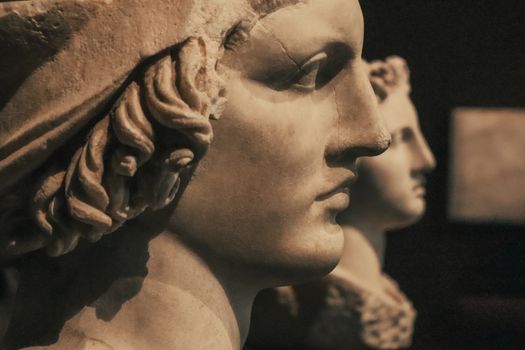
Fine art detail of ancient marble sculptures in a museum setting.Photo: dilara irem / Pexels
To truly appreciate the vast spectrum of different types of art styles, we must begin at their foundational roots. Classical art, predominantly from ancient Greece and Rome, laid the groundwork for Western aesthetics, emphasizing harmony, balance, and idealized forms. Think of the perfect proportions of Greek sculptures or the meticulous detail in Roman frescoes. This period championed a realistic portrayal of the human form, often depicting mythological or heroic narratives, aiming for a sense of timeless beauty and order. The techniques involved precise carving, monumental architecture, and the use of durable materials like marble and bronze. The philosophical underpinning was a belief in human potential and rational thought, reflected in the art's clarity and structure. Following a period often referred to as the 'Dark Ages' in Western art, the Renaissance burst forth, revitalizing many of these classical ideals but infusing them with new scientific understanding and humanistic fervor. Spanning roughly from the 14th to the 17th century, the Renaissance saw a renewed interest in perspective, anatomy, and light, leading to a profound sense of realism and depth previously unseen. Artists like Leonardo da Vinci, Michelangelo, and Raphael mastered techniques such as sfumato, chiaroscuro, and linear perspective, allowing them to create incredibly lifelike and emotionally resonant works. The subject matter expanded to include more secular themes, portraits of individuals, and a deeper exploration of human emotion and experience, alongside religious narratives. This era marked a shift towards the artist as an individual genius, rather than merely a craftsman. The focus was on achieving perfection and beauty through meticulous observation and innovative techniques. The invention of oil painting also allowed for richer colors and smoother transitions, adding to the illusion of reality. Understanding these foundational styles is crucial because their principles and innovations continued to influence countless movements that followed, either by directly building upon them or by intentionally rebelling against their conventions. They represent a pinnacle of technical mastery and intellectual inquiry, setting a high bar for artistic achievement and defining many of the aesthetic ideals that still resonate today. For more insights into these historical periods, explore the history of art movements.

The Emotional Depths: Baroque, Rococo, and Romanticism
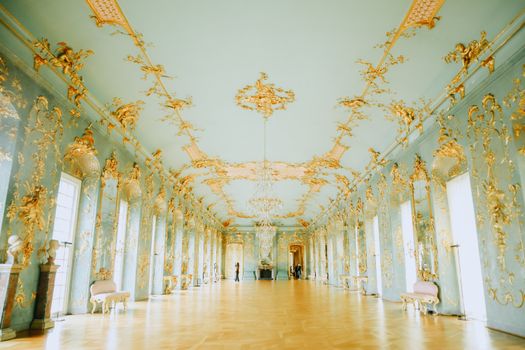
Luxurious Baroque-style room with intricate gold detailing and elegant chandeliers.Photo: Pham Ngoc Anh / Pexels
As the Renaissance began to wane, the desire for greater emotional intensity and dramatic flair gave rise to the Baroque style, flourishing from the early 17th century through the mid-18th century. Baroque art, characterized by its grandeur, opulence, and dynamic compositions, was often used by the Catholic Church as a powerful tool for counter-reformation, inspiring awe and devotion. Artists like Caravaggio and Bernini employed dramatic lighting (tenebrism), intense emotion, and a sense of movement to draw the viewer into the artwork. Think of swirling draperies, ecstatic religious visions, and monumental scale designed to overwhelm the senses. This style was a departure from the calm rationality of the High Renaissance, embracing passion and theatricality. Reacting to the weighty drama of the Baroque, the Rococo style emerged in the 18th century, primarily in France, as a lighter, more playful, and intimate aesthetic. Rococo emphasized delicacy, ornamentation, and pastel colors, often depicting scenes of aristocratic leisure, courtship, and idyllic nature. Artists like Fragonard and Watteau created works that were charming, sensual, and decorative, filled with intricate details, curved lines, and a sense of carefree elegance. While it shared the Baroque's love for elaborate decoration, Rococo shifted from monumental grandeur to delicate intimacy, reflecting a societal move towards private pleasures and aristocratic refinement. It was often criticized for its superficiality but remains a testament to artistic skill in creating beauty and fantasy. Moving into the late 18th and early 19th centuries, Romanticism swept across Europe, marking a profound shift in artistic and intellectual thought. Romantic artists rejected the Enlightenment's emphasis on reason and the Neoclassical adherence to classical forms, instead championing emotion, individualism, the sublime in nature, and the power of the imagination. Works by artists like Eugène Delacroix, J.M.W. Turner, and Caspar David Friedrich evoke strong feelings, whether it's the terror of a shipwreck, the majesty of a landscape, or the passion of a historical event. Color became more expressive, brushwork looser, and subjects often included exoticism, the macabre, and the heroic struggle of the individual against overwhelming forces. Romanticism celebrated the irrational, the mysterious, and the deeply personal, laying crucial groundwork for subsequent movements that would further push the boundaries of artistic expression and subject matter.

Modern Revolutions: Impressionism, Cubism, and Surrealism
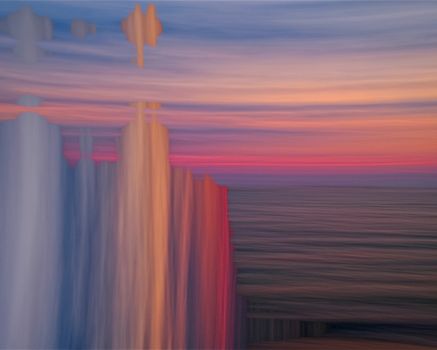
An abstract depiction of a dusk seascape with colorful surreal clouds and artistic vertical smears.Photo: Robert Clark / Pexels
The late 19th and early 20th centuries witnessed an explosion of innovative different types of art styles, fundamentally reshaping how art was created and perceived. Impressionism, emerging in the 1860s in France, was a radical departure from academic traditions. Artists like Claude Monet, Pierre-Auguste Renoir, and Edgar Degas sought to capture the fleeting 'impression' of a moment, focusing on light, color, and atmosphere rather than precise detail. They moved out of the studio and into the open air (en plein air), using broken brushstrokes, pure, unmixed colors, and daring compositions to depict everyday life, landscapes, and cityscapes. This emphasis on subjective perception and the act of seeing itself opened doors for future avant-garde movements. Their exhibitions were initially met with ridicule but eventually paved the way for modern art. As a direct response to Impressionism's focus on optical reality, Post-Impressionism (artists like Van Gogh, Cézanne, and Gauguin) explored more personal and symbolic expressions, leading directly into the early 20th-century avant-garde. Cubism, pioneered by Pablo Picasso and Georges Braque around 1907, was arguably the most revolutionary movement of its time. Cubist artists deconstructed objects and figures into geometric shapes, presenting multiple viewpoints simultaneously on a single canvas. They challenged traditional perspective and the illusion of depth, forcing viewers to engage with the artwork intellectually as well as visually. This analytical approach, breaking down forms and reassembling them, profoundly influenced sculpture, architecture, and design, demonstrating art's capacity to represent reality in entirely new, abstract ways. Its impact on subsequent movements cannot be overstated. Emerging in the 1920s, Surrealism, led by André Breton and artists like Salvador Dalí and René Magritte, delved into the realm of the subconscious mind, dreams, and irrationality. Influenced by Freudian psychoanalysis, Surrealists aimed to liberate the imagination by bypassing conscious control, creating bizarre, dreamlike, and often disturbing juxtapositions of ordinary objects. Their art explored themes of desire, fear, and the uncanny, revealing hidden truths about the human psyche. Whether through automatism (spontaneous creation) or meticulously rendered dreamscapes, Surrealism sought to challenge conventional notions of reality and beauty. This movement extended beyond painting into literature, film, and photography, becoming a powerful force for psychological and social commentary. These modern revolutions collectively shattered centuries of artistic conventions, paving the way for the diverse and often challenging art of the contemporary era. Discover more about their origins in our piece on the evolution of artistic expression.

Navigating Contemporary Art: Abstraction, Pop Art, and Beyond
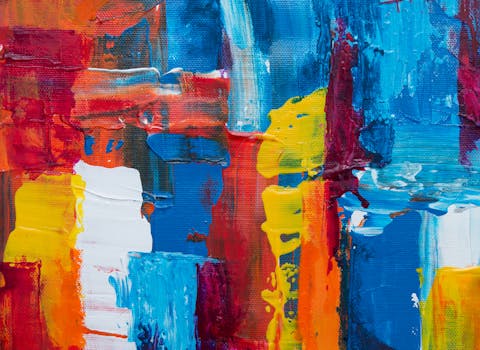
Vibrant abstract acrylic painting with bold brushstrokes and vivid colors on canvas.Photo: Steve A Johnson / Pexels
The mid-20th century onwards has been a period of unprecedented diversity and experimentation, giving rise to an array of different types of art styles that challenge, provoke, and redefine art itself. Abstract Expressionism, emerging in New York in the 1940s and 50s, was a significant post-World War II movement. Artists like Jackson Pollock and Mark Rothko rejected representational forms entirely, focusing instead on expressing raw emotion and psychological states through spontaneous, gestural brushwork (Action Painting) or fields of color (Color Field Painting). This emphasis on the artist's inner experience and the process of creation itself marked a shift towards art as a deeply personal and often monumental statement. In stark contrast to Abstract Expressionism's introspection, Pop Art burst onto the scene in the 1950s and 60s, primarily in Britain and the United States. Artists such as Andy Warhol, Roy Lichtenstein, and Claes Oldenburg embraced popular culture, advertising, and consumerism as valid subjects for fine art. They used bold colors, iconic imagery from comics and product labels, and often mass-production techniques like silkscreen printing to critique, celebrate, or simply observe the burgeoning consumer society. Pop Art blurred the lines between high and low culture, making art accessible and often ironic, directly engaging with the everyday visual landscape. Beyond these, the contemporary art landscape continues to evolve rapidly, encompassing a vast array of styles and approaches. Minimalism (focusing on geometric forms and industrial materials), Conceptual Art (where the idea behind the artwork is paramount), Performance Art (using the artist's body as a medium), and Installation Art (creating immersive environments) are just a few examples. Today, artists often draw from multiple traditions, blend mediums, and engage with global issues like identity, technology, and environmentalism. There's a strong emphasis on interdisciplinary work, viewer participation, and the breaking down of traditional boundaries. The 'style' often becomes less about a prescribed aesthetic and more about a particular conceptual framework or artistic strategy. This fluid and eclectic nature makes contemporary art both challenging and incredibly exciting, constantly pushing the boundaries of what art can be and do. Tips for appreciating contemporary art: * **Embrace the new:** Don't expect traditional beauty; look for ideas, experiences, and provocations. * **Read the labels:** Contextual information is often crucial for understanding the artist's intent. * **Ask questions:** Why was this made? What is it trying to say? How does it make me feel? * **Consider the medium:** How does the choice of material or process contribute to the meaning? * **Stay open-minded:** Contemporary art often challenges norms; allow yourself to be challenged. * **Visit diverse venues:** Explore not just major museums, but also smaller galleries and alternative spaces to see a wider range of emerging styles.

Comparison

FeatureRenaissanceImpressionismCubism
Primary FocusRealism, Humanism, IdealismLight, Color, Atmosphere, Subjective PerceptionDeconstruction, Multiple Perspectives, Abstraction
Key TechniquesLinear Perspective, Sfumato, ChiaroscuroBroken Brushstrokes, En Plein Air, Pure ColorGeometric Forms, Analytical Breakdown, Simultaneous Views
Subject MatterReligious, Mythological, Portraits, Human FormLandscapes, Everyday Life, Cityscapes, PortraitsStill Lifes, Portraits, Figures (deconstructed)
Emotional ImpactCalm, Balanced, HarmoniousImmediate, Fleeting, SensoryIntellectual, Challenging, Analytical

What Our Readers Say

5 ★★★★★

"This article on different types of art styles was incredibly comprehensive and easy to understand. It really helped me connect the dots between historical movements and contemporary works."

5 ★★★★★

"As an aspiring artist, understanding these different types of art styles is crucial. This guide provided clear distinctions and historical context that I couldn't find elsewhere so concisely."

5 ★★★★★

"I used to be intimidated by art history, but this breakdown of different types of art styles made it so accessible. Now I feel much more confident discussing and appreciating various artworks."

4 ★★★★☆

"Excellent overview! While it couldn't cover every single niche style, it did a fantastic job of highlighting the major different types of art styles and their core philosophies. Very helpful for a beginner."

5 ★★★★★

"My art appreciation class just started, and this resource on different types of art styles is exactly what I needed. The comparison table was particularly useful for quick reference!"

Frequently Asked Questions

What is the most important factor in defining an art style?
The most important factor in defining an art style is a consistent set of visual characteristics, techniques, and underlying philosophies shared by artists within a particular period or movement. These elements collectively create a recognizable aesthetic that distinguishes one style from another, reflecting the cultural and intellectual climate in which it emerged.
Is contemporary art considered a single style?
No, contemporary art is not a single style but rather an umbrella term for art created from the 1960s or 1970s up to the present day. It encompasses a vast and diverse range of different types of art styles, movements, and individual approaches, often characterized by experimentation, conceptual depth, and a blurring of traditional boundaries.
How can I learn to identify different types of art styles?
To learn to identify different types of art styles, focus on key visual elements such as brushwork, color palette, composition, subject matter, and the overall mood or message. Regularly viewing art in museums, reading about art history, and comparing and contrasting works from different periods will train your eye to recognize these distinguishing features.
Do art styles still evolve today, or are they all established?
Art styles are constantly evolving, even today. While historical styles are established, contemporary art is a dynamic field where new movements, sub-genres, and individual styles emerge regularly. Artists continue to innovate, reacting to current events, technological advancements, and shifts in societal values, ensuring art remains a living and changing form of expression.
What is the difference between an art style and an art movement?
An art movement is a tendency or style in art with a specific common philosophy or goal, followed by a group of artists during a restricted period of time. An art style, while often associated with a movement, can also refer to the distinctive manner in which an individual artist creates, or a broader set of aesthetic characteristics that might span multiple movements or periods.
Who benefits most from understanding different types of art styles?
Everyone benefits from understanding different types of art styles! Art enthusiasts gain deeper appreciation, students find context for their studies, artists discover inspiration and historical grounding, and even casual observers can better interpret and enjoy the world around them, as art reflects and shapes culture.
Is there a 'correct' way to appreciate a particular art style?
There isn't a single 'correct' way to appreciate an art style. While understanding its historical context and artistic intentions can enrich your experience, personal connection and emotional response are equally valid. The most important thing is to engage with the artwork openly and allow it to provoke thought or feeling, whether it aligns with scholarly interpretations or not.
What future trends might influence new art styles?
Future trends influencing new art styles are likely to include advancements in AI and digital technologies, increased global interconnectedness fostering cross-cultural influences, growing awareness of environmental and social justice issues, and continued exploration of virtual and augmented realities. These factors will push artists to innovate in both form and content.

Embark on your own artistic discovery. By exploring these different types of art styles, you not only deepen your appreciation for human creativity but also gain a richer understanding of history, culture, and the endless possibilities of visual expression. Start seeing the world through an artist's eyes today.

Topics: different types of art stylesart movementsart historyvisual artsart appreciation
Leo List
Brampton weed
Adultwork