Unveiling the Different Types of Sculpture Art
July 23, 2026 14 min read 2,882 words
Dive into the captivating world of three-dimensional art and discover the myriad forms and techniques that define sculpture.
Start Your Artistic Journey
The Enduring Legacy of Traditional Sculpture Techniques
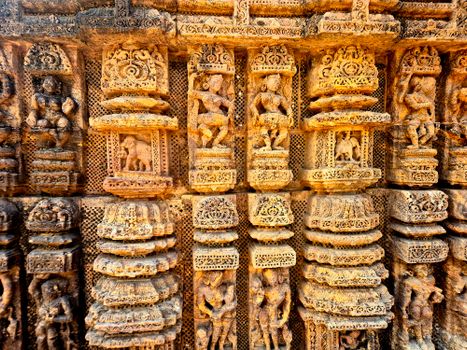 Photo: Nikhil Singh / Pexels
Sculpture, at its heart, is the art of giving form to material, transforming raw substance into expressive three-dimensional objects. Throughout history, artists have developed and refined a variety of techniques to achieve this, each with its own unique challenges and aesthetic outcomes. Understanding these traditional methods is crucial for appreciating the foundation upon which all other forms of sculpture are built.
**Carving** stands as perhaps the oldest and most direct method of sculpture. It involves removing material from a larger block to reveal the desired form within. Stone carving, exemplified by the colossal statues of ancient Egypt, Greece, and Rome, requires immense physical strength, precision, and an intuitive understanding of the material's properties. Marble, granite, and limestone have been favored for their durability and ability to hold fine detail. Wood carving, another ancient practice, offers a warmer, more organic aesthetic. Different woods, from soft pine to hard oak, present distinct challenges and opportunities, influencing the final texture and grain of the piece. The tools for carving have evolved over millennia, from rudimentary flint and bronze chisels to modern power tools, yet the fundamental principle of subtraction remains unchanged. This subtractive process demands a sculptor to visualize the final form within the block, leaving no room for error or addition once material is removed. The inherent resistance of materials like stone and wood lends a sense of permanence and gravitas to carved works, often reflecting the spiritual or monumental intentions of their creators.
**Modeling**, in contrast to carving, is an additive process. It involves building up a form using pliable materials such as clay, wax, or plaster. Clay modeling is particularly versatile, allowing for spontaneous expression and easy modification. Artists often use an armature, a skeletal support structure made of wire or wood, to prevent the material from collapsing under its own weight, especially for larger works. The tactile nature of modeling allows for a more fluid and intuitive creation process, making it a popular choice for preliminary studies and for capturing movement and emotion. Once a model is complete, it can be fired (in the case of clay) to create ceramics, or it can serve as the basis for casting.
**Casting** is a transformative process where a liquid material is poured into a mold and allowed to solidify. The most famous form of casting is bronze casting, a technique perfected in ancient civilizations and still widely used today. The lost-wax (cire perdue) method is a complex multi-step process: an original model is created, typically in wax, then encased in a heat-resistant mold. The wax is melted out, leaving a cavity into which molten bronze is poured. Once cooled, the mold is broken away, revealing the metal sculpture. This process allows for the creation of multiple editions of a single work and is particularly suited for intricate details and durable outdoor installations. Other materials like plaster, resin, and even glass can also be cast, offering different finishes and properties. Each traditional technique demands a deep understanding of materials, tools, and processes, showcasing the sculptor's mastery and vision. For more insight into artistic practices, explore
the world of fine arts.
The Evolution of Form: From Relief to Assemblage
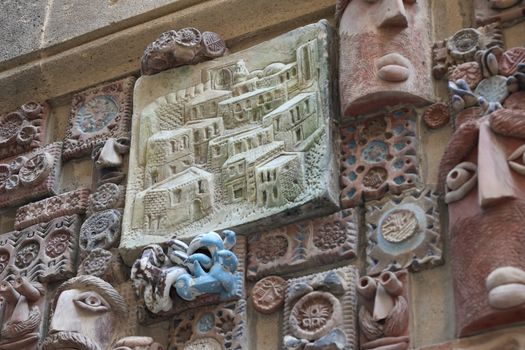 Photo: Tahir Xəlfəquliyev / Pexels
Beyond the foundational techniques, sculpture has evolved dramatically in its forms and conceptual approaches. Two primary categories define how a sculpture interacts with its surrounding space: in-the-round and relief. **Sculpture in-the-round**, also known as freestanding sculpture, is designed to be viewed from all sides. It occupies three-dimensional space fully and invites viewers to walk around it, experiencing its form, volume, and composition from multiple perspectives. Iconic examples include Michelangelo's 'David' or Rodin's 'The Thinker.' These works engage directly with the viewer's physical space, often creating a sense of presence and interaction. The artist must consider every angle and contour, ensuring a compelling visual narrative regardless of the viewing position. This form allows for a complete exploration of the object's spatial relationships and its interplay with light and shadow across its surfaces.
**Relief sculpture**, in contrast, projects from a background surface and is typically viewed from the front. It bridges the gap between two-dimensional painting and fully three-dimensional sculpture. Relief can be categorized by the degree of projection:
* **Bas-relief (low relief)**: The forms project only slightly from the background, as seen in ancient Egyptian hieroglyphs or Roman coins. The emphasis is often on outline and subtle modeling, giving the impression of an image emerging from the surface.
* **Alto-relief (high relief)**: The forms project boldly from the background, often to the extent that parts of the figures are entirely detached from the background, resembling freestanding sculpture. Greek temple pediments and Gothic cathedral facades often feature alto-relief, creating dramatic shadows and a strong sense of depth.
* **Sunk relief (incised relief)**: The carving is cut into the surface, with the highest point of the sculpture being the original surface of the material. This is characteristic of some Egyptian carvings, where figures are outlined and then modeled within the sunken area.
Moving into the 20th century, the concept of sculpture expanded dramatically with the advent of **assemblage**. This revolutionary approach involves creating three-dimensional artworks by compiling and joining various found objects and non-traditional materials. Artists like Pablo Picasso, Kurt Schwitters, and Robert Rauschenberg pioneered assemblage, challenging traditional notions of artistic materials and craftsmanship. Instead of shaping raw materials, the artist selects, arranges, and fixes existing objects, often imbuing them with new meanings through their combination. Assemblage can range from small, intricate constructions to large-scale, immersive environments. It emphasizes the conceptual aspect of art, inviting viewers to consider the history and implications of the objects used, transforming everyday items into profound artistic statements. This technique reflects a shift from the sculptor as a master of material transformation to a curator and commentator on the material world. The rise of assemblage paved the way for even more experimental forms, blurring the lines between sculpture and other art forms, and continually pushing the boundaries of what sculpture can be.
The Avant-Garde: Installation, Kinetic, and Digital Sculpture
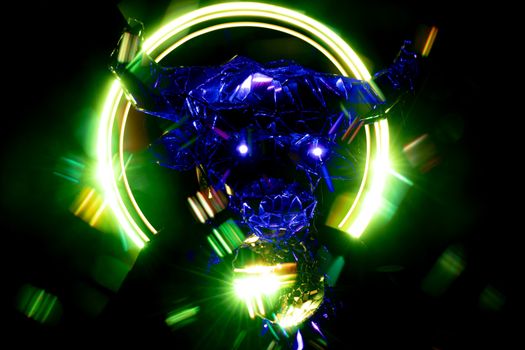 Photo: Merlin Lightpainting / Pexels
The 20th and 21st centuries have witnessed an explosion of innovative sculptural forms that redefine its boundaries, moving beyond static objects to encompass environments, movement, and even intangible elements. These avant-garde approaches reflect a broader cultural shift towards conceptual art, challenging viewers to engage with art in new and often interactive ways.
**Installation art** is perhaps one of the most significant developments in contemporary sculpture. Unlike traditional sculptures that are typically self-contained objects, installations are site-specific or designed for a particular space, transforming the entire environment into an artwork. They often incorporate a variety of media, including light, sound, video, and found objects, to create an immersive experience for the viewer. Artists like Yayoi Kusama, Olafur Eliasson, and James Turrell are renowned for their captivating installations that manipulate perception and engage multiple senses. The ephemeral nature of many installations means they exist only for a specific period or in a particular location, emphasizing the experience over the permanence of the object. This form encourages viewers to become active participants, walking through, around, or even within the artwork, experiencing its atmosphere and message holistically. Installation art challenges the traditional gallery white cube, often spilling out into public spaces, natural landscapes, or abandoned buildings, thus integrating art directly into the fabric of life and community.
**Kinetic sculpture** introduces the element of movement into art. Pioneered by artists such as Alexander Calder with his iconic mobiles, kinetic sculptures are designed to move, either through natural forces like wind, by mechanical means, or through human interaction. This movement can be subtle and graceful, or dynamic and unpredictable, adding a temporal dimension to the artwork. Kinetic art explores concepts of time, change, and the ephemeral nature of existence. It often plays with light and shadow, creating ever-changing patterns and forms as the components shift. The engineering and mechanical ingenuity required for kinetic sculpture often blend seamlessly with artistic vision, creating works that are both aesthetically pleasing and technically fascinating. It's a departure from the static ideal of classical sculpture, embracing the dynamism of the modern world.
Finally, the advent of technology has ushered in **digital sculpture**. This encompasses a broad range of practices, from sculptures designed using 3D modeling software and then fabricated through 3D printing or CNC machining, to purely virtual sculptures that exist only in digital space. Artists can create complex forms and intricate details that would be impossible or prohibitively difficult to achieve through traditional methods. Digital sculpture also includes interactive works that respond to viewer input, virtual reality experiences that allow audiences to 'walk through' impossible spaces, and augmented reality pieces that overlay digital forms onto the physical world. This frontier of sculpture blurs the lines between the tangible and the intangible, offering new avenues for artistic expression and engagement. It democratizes the creation process to some extent, making complex forms accessible through software, while simultaneously opening up new philosophical questions about the nature of art in a digital age. For a deeper understanding of how different art forms intertwine, check out this resource on
the evolution of artistic expression.
Navigating the Sculptural Landscape: Tips for Appreciation and Creation
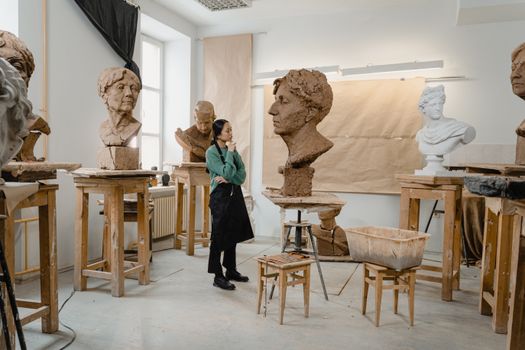 Photo: Tima Miroshnichenko / Pexels
Exploring the diverse world of sculpture can be an incredibly rewarding experience, whether you're an avid art enthusiast or an aspiring artist. To truly appreciate the breadth and depth of sculptural art, consider these tips for engagement and understanding, and if you're feeling inspired, some advice for starting your own creative journey.
**Tips for Appreciating Sculpture:**
* **Engage with All Angles:** Remember that most sculptures are three-dimensional. Don't just view a piece from the front. Walk around it, observe how light and shadow play on its surfaces, and notice how its form changes from different perspectives. This is especially crucial for freestanding works.
* **Consider the Material:** The choice of material is never arbitrary. How does the texture of marble differ from the sheen of bronze or the grain of wood? What properties of the material did the artist exploit or overcome? Understanding the material's inherent qualities can deepen your appreciation of the artist's skill and intent.
* **Research the Context:** A sculpture's meaning is often enriched by its historical, cultural, and personal context. Who created it? When and where was it made? What was happening in the world at that time? What was the artist's message or purpose?
* **Look for the Artist's Hand:** Even in highly refined works, you can often discern the marks of the artist's tools or the unique qualities of their touch. These subtle details can connect you more intimately with the creative process.
* **Question Your Feelings:** Art is meant to evoke a response. Don't be afraid to ask yourself what emotions or thoughts a sculpture provokes. Is it calming, unsettling, thought-provoking, or beautiful? There's no right or wrong answer to how you feel.
**Tips for Beginning Your Own Sculptural Journey:**
* **Start Simple and Small:** Don't aim for a monumental masterpiece on your first try. Begin with accessible materials like modeling clay, air-dry clay, or even paper maché. These allow for experimentation without significant investment.
* **Experiment with Materials:** Try different substances. Work with wire to understand armatures, carve soap or soft wood to get a feel for subtraction, or experiment with found objects for assemblage. Each material teaches you something new.
* **Learn Basic Techniques:** Watch tutorials, read books, or even take a local class. Understanding fundamental techniques like modeling, joining, or simple carving will build your confidence and skill.
* **Embrace Imperfection:** Your first attempts won't be perfect, and that's okay! Sculpture is a process of learning and discovery. Embrace mistakes as part of the creative journey.
* **Find Inspiration Everywhere:** Look at sculptures in museums, public spaces, and online. Pay attention to forms in nature, architecture, and everyday objects. Inspiration is abundant if you know where to look.
By engaging thoughtfully with existing works and bravely experimenting with your own creations, you can unlock a deeper understanding and enjoyment of the multifaceted world of sculpture art.
