
Your Guide to an Art History Timeline Explained
Journey through millennia of human creativity, understanding how art has shaped and reflected our world.
Start Your Art JourneyKey Takeaways
- ✓ Art history spans over 40,000 years, from prehistoric cave paintings to contemporary digital art.
- ✓ Major art movements often emerge as reactions to previous styles or societal changes.
- ✓ Understanding the historical context is crucial to interpreting art's meaning and significance.
- ✓ Technological advancements, philosophical shifts, and political events profoundly influence artistic expression.
How It Works
Begin your journey in the earliest human expressions, from cave paintings to the monumental structures of ancient civilizations. Understand the foundational role of art in early societies.
Delve into the ideals of Greek and Roman art, followed by the spiritual and symbolic focus of the Middle Ages. Witness the shift from idealized forms to religious narratives.
Experience the rebirth of humanism, the drama of the Baroque, the elegance of Rococo, and the revolutionary spirit of Modernism. See how art became a tool for individual expression and social critique.
Conclude with the diverse and often challenging landscape of contemporary art, from Postmodernism to digital art. Reflect on art's ongoing dialogue with identity, technology, and global issues.
The Dawn of Creativity: Prehistoric and Ancient Art Periods
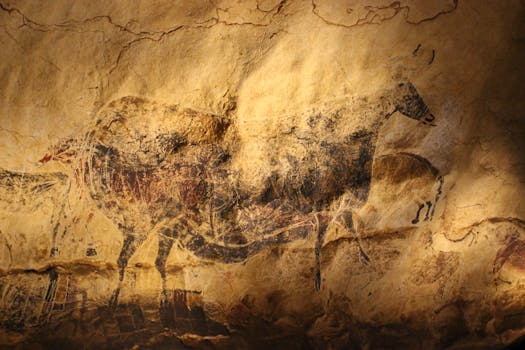 Photo: toshihiko tanaka / Pexels
Classical Ideals and Medieval Spirituality: Greek, Roman, and Middle Ages Art
 Photo: Greta Hoffman / Pexels
From Rebirth to Revolution: Renaissance, Baroque, Rococo, and Modern Art
Navigating the Labyrinth: Modern and Contemporary Art Challenges
Comparison
| Era/Movement | Key Characteristics | Dominant Mediums | Notable Artists |
|---|---|---|---|
| Ancient Egypt | Symbolism, afterlife focus, permanence | Stone sculpture, tomb painting, architecture | N/A (collective effort) |
| Classical Greece | Idealism, humanism, balance, proportion | Marble sculpture, pottery, architecture | Phidias, Praxiteles |
| Gothic | Spirituality, soaring height, divine light | Stained glass, monumental sculpture, architecture | Giotto (proto-Renaissance) |
| Renaissance | Naturalism, perspective, humanism, rebirth | Oil painting, fresco, marble sculpture | Leonardo, Michelangelo, Raphael |
| Baroque | Drama, emotion, grandeur, movement | Oil painting, sculpture, architecture | Caravaggio, Bernini, Rubens |
| Impressionism | Light, color, fleeting moments, visible brushstrokes | Oil painting (plein air) | Monet, Renoir, Degas |
| Cubism | Fragmentation, multiple perspectives, geometric forms | Oil painting, collage, sculpture | Picasso, Braque |
| Contemporary | Pluralism, conceptual, diverse mediums, social commentary | Installation, video, digital, performance | Ai Weiwei, Cindy Sherman, Jeff Koons |
What Readers Say
"This art history timeline explained everything so clearly! I always felt overwhelmed by art history, but this guide breaks it down into understandable chunks, making it enjoyable to learn."
Sarah J. · Brooklyn, NY"As an aspiring artist, understanding the evolution of styles is crucial. This article provided an excellent framework, connecting movements and showing their influences beautifully."
Mark T. · Los Angeles, CA"The depth and breadth of information here are truly impressive. I've been teaching art history for years, and this summary captures the essence of each period concisely and accurately, a valuable resource for students."
Dr. Eleanor Vance · Boston, MA"While incredibly thorough, I found some sections quite dense. However, the overall structure and the way it links historical context to artistic output are exceptionally well done."
David L. · Chicago, IL"I used this guide to prepare for a museum visit, and it completely transformed my experience. I could identify styles and understand the historical significance of the pieces much better thanks to this art history timeline explained."
Chloe P. · Austin, TXFrequently Asked Questions
What is the most important period in art history?
There isn't one single 'most important' period, as each era contributed uniquely to the ongoing narrative of human creativity. The Renaissance is often highlighted for its groundbreaking innovations in perspective and humanism, while Modern Art is crucial for its radical questioning of traditional forms. Each period offers invaluable insights into the human condition and artistic evolution.
Is it hard to learn art history?
Learning art history can seem daunting due to its vast scope, but it's incredibly rewarding. Breaking it down into manageable periods, focusing on key artists and movements, and understanding the historical context makes it much more accessible. This guide aims to simplify that process and make it enjoyable for beginners.
How do I start studying an art history timeline?
Begin by familiarizing yourself with the major chronological periods, from Prehistoric to Contemporary. Focus on understanding the defining characteristics, key artists, and historical context of each. Utilize resources like this guide, visit museums, read introductory books, and watch documentaries to deepen your understanding. Don't be afraid to start with what interests you most!
Why is understanding art history valuable?
Understanding art history offers profound insights into human civilization, culture, philosophy, and technological advancements across different eras. It enhances critical thinking, visual literacy, and provides a deeper appreciation for the diverse ways humans express themselves. It also helps contextualize contemporary art and culture.
How does art history differ from art appreciation?
Art history focuses on the chronological development of art, examining styles, movements, artists, and their historical, social, and cultural contexts. Art appreciation, while often informed by history, is more about developing a personal understanding and enjoyment of art, focusing on aesthetic qualities, emotional impact, and individual interpretation.
Who should use an art history timeline explained guide?
Anyone with an interest in art, culture, and history can benefit from an art history timeline explained. It's ideal for students, art enthusiasts, museum-goers, aspiring artists, or simply curious individuals looking to broaden their knowledge and deepen their appreciation for human creativity across millennia.
Are there any risks in oversimplifying art history?
Oversimplifying art history can lead to a loss of nuanced understanding, potentially overlooking the complexities, regional variations, and individual artistic innovations within broader movements. While timelines provide a useful framework, it's important to remember that art history is a rich, interconnected tapestry with many threads that defy simple categorization.
What are the future trends in art history scholarship?
Future trends in art history scholarship are likely to include increased focus on global art histories beyond the Western canon, interdisciplinary approaches incorporating digital humanities and science, and a deeper exploration of art's role in addressing contemporary social and environmental issues. The study of digital and AI-generated art will also become increasingly prominent.
Embark on your journey through the captivating world of art. This art history timeline explained provides the perfect foundation to explore, appreciate, and understand the masterpieces that define human civilization. Start discovering today and let the stories of art unfold before you.